

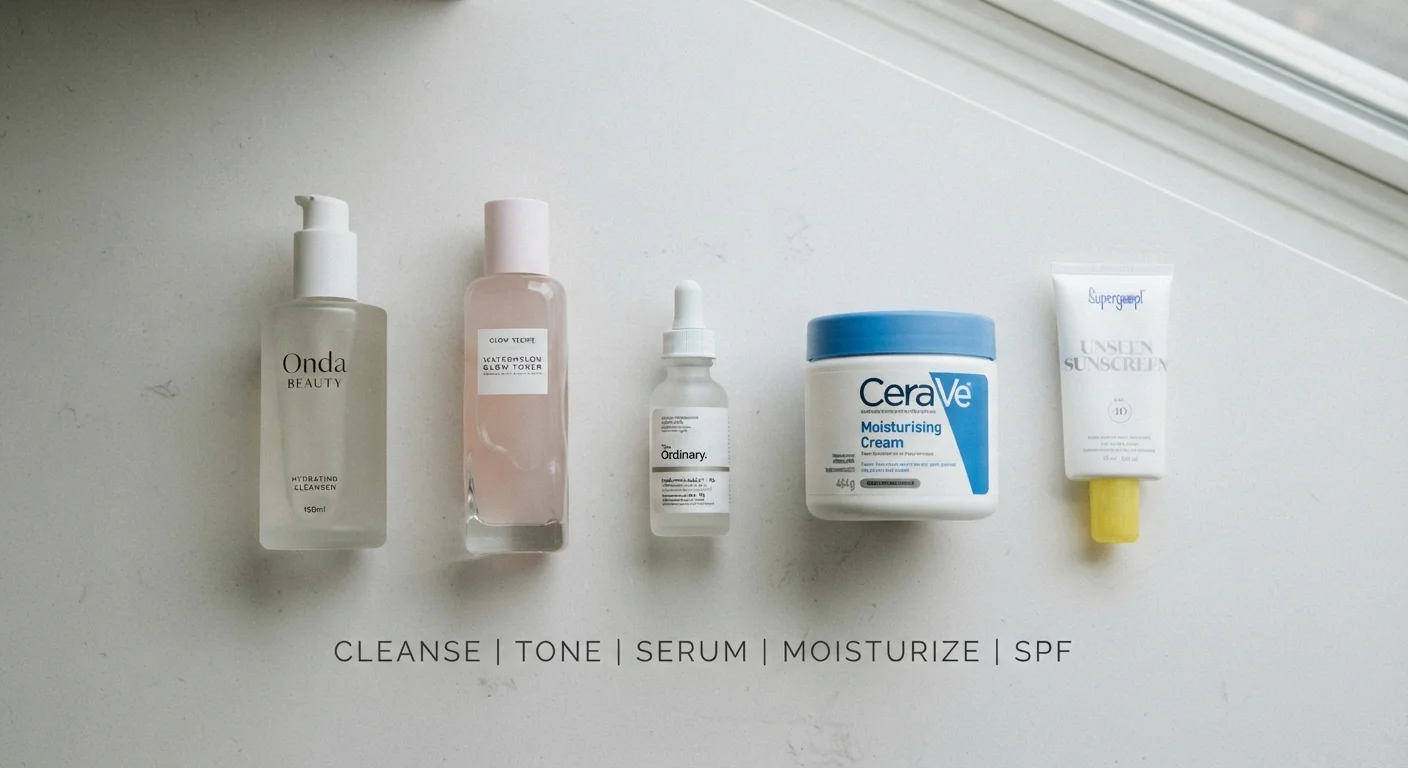
Key Takeaways
- Apply skincare products from thinnest to thickest consistency for optimal absorption.
- Water-based formulas should go on before oil-based ones to avoid blocking penetration.
- Sunscreen is always the final step in a daytime routine — never layered beneath actives.
- Waiting 30–60 seconds between layers helps each product absorb before the next is applied.
- Some active ingredients interact poorly when layered together — ingredient awareness matters.
What you will need
Why Layering Order Actually Matters
Skincare layering isn't a marketing concept — it's grounded in basic chemistry and skin physiology. The outer layer of skin, known as the stratum corneum, acts as a selective barrier. Lighter, water-based products can pass through it more easily, while heavier, oil-based formulas sit closer to the surface. When a thick, occlusive product is applied first, it forms a physical film that prevents thinner products applied on top from reaching the skin cells where they're meant to act.
The core rule is straightforward: apply products from thinnest to thickest consistency, and water-based before oil-based. This isn't rigid dogma — there is some flexibility depending on specific formulations — but as a general framework it reliably maximizes how well each product can do its job.
If you're building a skincare routine from scratch, starting with a minimal number of products and learning how to layer them correctly is more valuable than having a large collection applied in the wrong sequence.
What you will need
What You'll Need
The exact products in your routine will depend on your skin type, concerns, and goals. Not every step below is required for every person — a simple routine with just a cleanser, moisturizer, and sunscreen is entirely valid. The key is knowing which category each product falls into so you can place it correctly in the sequence.
Gentle Cleanser
Removes surface dirt, oil, and residue so subsequent products can absorb properly.
Toner or Essence
Rebalances skin's pH after cleansing and prepares skin to receive serums.
Treatment Serum or Active
Delivers concentrated ingredients — such as vitamin C, niacinamide, or hyaluronic acid — into the skin.
Eye Cream
Addresses the delicate under-eye area with formulas suited to thinner skin.
Moisturizer
Locks in hydration and supports the skin barrier after lighter treatment layers.
Facial Oil
Seals in moisture as a final emollient layer in evening routines.
Broad-Spectrum Sunscreen (SPF 30 or higher)
Protects against UV damage — the essential final step in any morning routine.
The Correct Layering Sequence
Follow the steps below for both morning and evening routines. Morning routines end with sunscreen; evening routines may swap sunscreen for a facial oil or richer balm as a final seal. Take your time between layers — rushing reduces absorption.
Cleanse Your Skin
Start with a clean canvas. A gentle cleanser removes makeup, sunscreen residue, pollutants, and excess oil that would otherwise prevent subsequent products from making contact with skin. Use lukewarm — not hot — water, and pat dry rather than rubbing. For evening routines involving heavy SPF or makeup, a double cleanse (an oil-based cleanser followed by a water-based one) can be worthwhile.
Apply Toner or Essence (If Using)
Toners and essences are optional but useful for many routines. They restore the skin's natural pH after cleansing and add an initial layer of hydration or active ingredients. Apply by gently pressing into skin with your palms or a cotton pad — avoid dragging. Let this layer settle for about 30 seconds before proceeding.
Apply Treatment Serums or Actives
Serums are the workhorse layer — they contain higher concentrations of targeted ingredients than most other products. Apply your thinnest serum first. If using multiple serums, layer from lightest to heaviest texture. Common active ingredients at this stage include vitamin C (morning), niacinamide, and retinoids (evening). Apply a small amount — typically 2–3 drops — and press gently across the face and neck.
Apply Eye Cream (If Using)
Eye creams are formulated for the thinner, more delicate skin around the eyes. Apply after serums but before your main moisturizer, using the ring finger — which naturally applies the least pressure. Dot gently around the orbital bone; avoid pulling or dragging the skin.
Apply Moisturizer
Moisturizer seals in the active layers beneath it and supports the skin barrier. Choose a formula appropriate for your skin type — gel-based for oily or combination skin, richer creams for dry or mature skin. Apply in upward, outward strokes across the face and neck. Allow a minute for it to fully absorb, especially before layering sunscreen on top. If you notice your moisturizer has started to feel less effective, our article on why moisturizers sometimes stop working offers useful context.
Apply Facial Oil (Evening Only, If Using)
Facial oils are occlusive — they create a seal that limits moisture evaporation. Because they form a physical barrier, they must go on after water-based products and moisturizers, not before. Warm 2–4 drops between your palms and gently press into skin. Reserve oils for evening use unless you are not applying sunscreen afterward.
Apply Sunscreen (Morning Routines Only)
Sunscreen is non-negotiable in any morning routine and must be the final skincare step. Apply a generous, even layer — about a nickel-sized amount for the face alone — and allow it to set for a few minutes before applying makeup if desired. Do not layer anything over it that could disrupt the protective film.
The 30-Second Rule for Better Absorption
Waiting roughly 30 to 60 seconds between each product gives the previous layer time to partially absorb rather than simply mixing with the next formula. This is especially important between an active serum and a moisturizer. You don't need a precise timer — just enough time to let the product settle before moving on.
Layering Certain Actives Can Cause Irritation
Combining ingredients like retinoids, AHAs, BHAs, and vitamin C in a single routine — particularly in the same session — can over-exfoliate or sensitize skin. This is especially relevant for those new to actives or with reactive skin types. Our article on ingredients that don't play well together covers the most common problematic pairings.
Sunscreen Must Always Come Last in the Morning
Sunscreen is formulated to sit on top of the skin and form a protective film. Applying anything over it — including a moisturizer or facial oil — can physically disrupt that barrier and reduce its effectiveness. In a morning routine, sunscreen is always the final step before makeup, if worn. For more on how SPF ratings work in practice, see our guide on what SPF numbers actually tell you.
Common Layering Mistakes and How to Avoid Them
Even with the right products, a few consistent errors can undermine results. Applying too many products at once is one of the most common — skin can only absorb so much, and over-layering increases the likelihood of pilling (where products ball up on the skin surface) and irritation.
Mixing incompatible active ingredients is another frequent issue. Certain combinations can cause redness, sensitivity, or simply neutralize each other's effectiveness. If your current routine involves multiple actives, it's worth reviewing which ones are safe to combine — our guide on ingredients that don't work well together covers the most commonly problematic pairings.
Finally, skipping the wait time between layers is a subtle but meaningful mistake. Giving each product 30–60 seconds to settle before moving to the next one is a small habit that consistently improves outcomes. If you're traveling and maintaining your routine away from home, packing light without leaving skincare essentials behind can help you prioritize which products are worth bringing.
This article is for informational purposes only and is not a substitute for personalized advice from a qualified dermatologist or skincare professional. Individual skin types and conditions vary; consult a professional if you have specific concerns.