

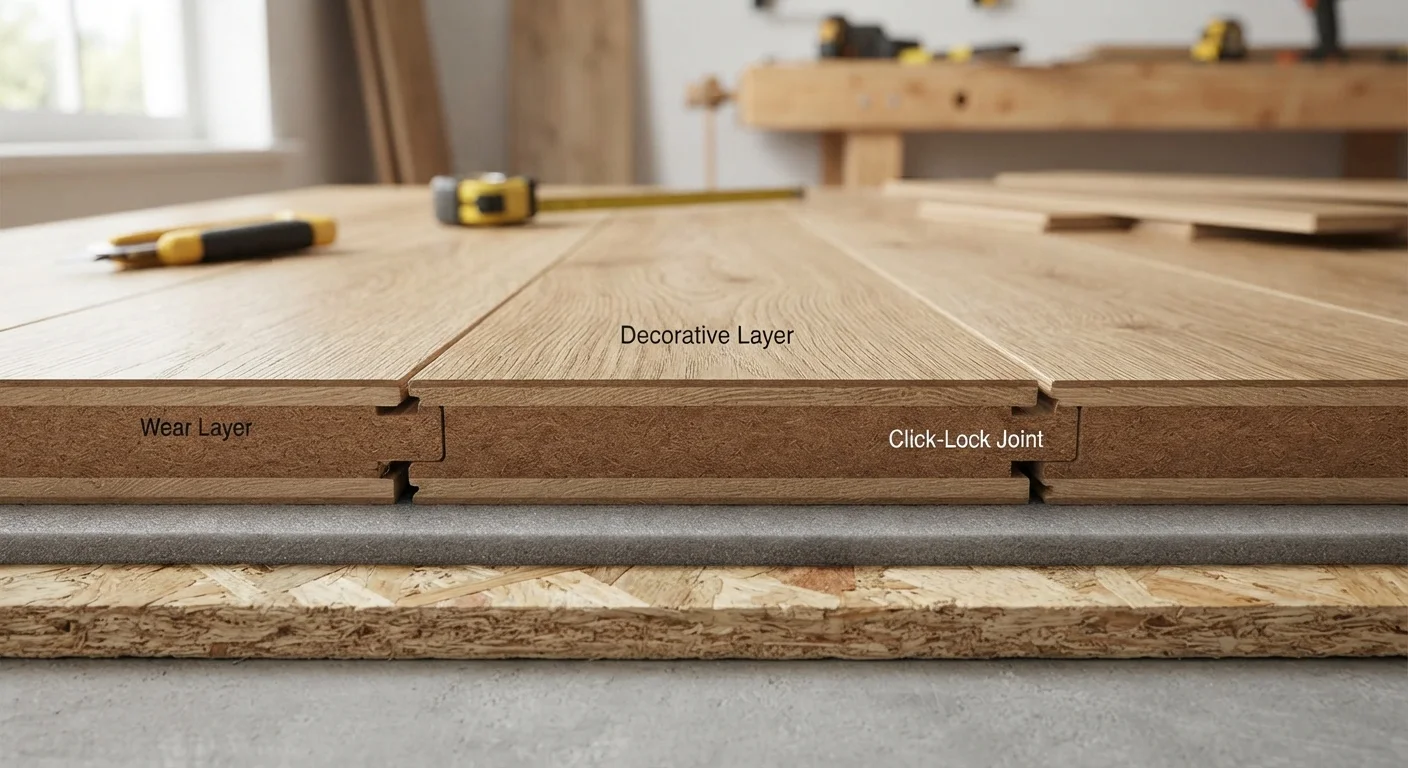
Key Takeaways
- Underlayment is required for most laminate floors and many floating hardwood installations.
- The right underlayment depends on your subfloor type — wood or concrete — and the room's moisture exposure.
- Foam underlayment is affordable and widely used; felt and rubber options offer better sound dampening.
- Some laminate planks come with underlayment pre-attached, eliminating the need for a separate layer.
- Thicker is not always better — underlayment that is too thick can stress locking joints on floating floors.
- A separate moisture barrier may be necessary on concrete slabs regardless of the underlayment chosen.
Floor Underlayment
Underlayment is a thin layer of material — typically foam, felt, or rubber — installed between your subfloor and finished flooring. It cushions foot traffic, dampens sound, provides a slight moisture barrier, and helps smooth out minor subfloor imperfections. Without it, many laminate and floating hardwood floors would feel hollow, sound echoey, and wear unevenly.
Underlayment is distinct from a vapor barrier: some underlayments include a built-in vapor retarder, while others require a separate poly sheeting layer beneath them, particularly over concrete subfloors.
What Underlayment Actually Does
Underlayment performs four core functions that your finished floor cannot handle on its own.
- Cushioning and comfort: It creates a slight give underfoot, making the floor feel more comfortable to walk and stand on over long periods.
- Sound dampening: It reduces both impact noise (footsteps traveling down through the floor) and airborne sound reflection (echoing in the room). This matters significantly in upper-story rooms or open-plan spaces.
- Moisture management: Many underlayments slow the movement of vapor from the subfloor upward into the flooring material — critical over concrete slabs and in areas like basements or kitchens.
- Surface leveling: Underlayment can bridge minor surface irregularities in the subfloor, helping the finished planks lie flat and lock together correctly.
None of these functions is cosmetic — each directly affects how long your floor performs and how it feels day to day. Choosing the wrong underlayment (or skipping it entirely) is one of the more common reasons laminate floors develop squeaks, gaps, or a hollow, plastic-sounding tap underfoot.
Underlayment vs. Vapor Barrier: Not the Same Thing
These two terms are sometimes used interchangeably but describe different materials with different jobs. Underlayment provides cushioning, sound absorption, and surface leveling. A vapor barrier (or retarder) specifically slows moisture migration. Some underlayment products combine both functions in a single sheet — look for a labeled perm rating if moisture protection is your priority.
Types of Underlayment and When to Use Each
The three main underlayment materials each have a distinct performance profile.
Foam
Standard polyethylene foam is the most widely available and least expensive option. It provides basic cushioning and a modest moisture barrier. It works well over wood subfloors in dry interior rooms, particularly for budget-conscious projects. Its main limitation is sound dampening — foam transmits more impact noise than denser materials.
Felt
Recycled felt underlayment is denser and heavier than foam, giving it noticeably better acoustic performance. It also tends to be more dimensionally stable, meaning it compresses less over time. Felt is a strong choice for upper floors and rooms where foot traffic noise is a concern. It is generally not moisture-resistant on its own, so a separate vapor barrier is needed on concrete.
Rubber and Cork
Rubber and cork underlayments offer the best combination of sound absorption and cushioning. They are more expensive but particularly useful in multi-unit buildings or rooms with significant noise sensitivity. Cork is also a natural material and resists mold growth, making it a practical option in moderate-moisture environments.
Check Your Warranty Before Choosing
Many laminate and engineered hardwood warranties specify which underlayment types are approved for use with their products. Using a non-approved underlayment — particularly one that is too thick or lacks required moisture ratings — can void the warranty even if the installation looks flawless. Download the manufacturer's installation guide before purchasing underlayment.
Matching Underlayment to Your Subfloor and Flooring Type
The right choice depends on two variables: what is beneath the underlayment and what is going on top of it.
Wood subfloor
Wood subfloors are generally drier and more flexible than concrete. Standard foam or felt underlayment works well here. Focus your selection on thickness and acoustic performance rather than moisture resistance.
Concrete subfloor
Concrete can wick moisture, so vapor management is the priority. Look for underlayment with a built-in vapor retarder (typically rated in perms — lower is more resistant), or install 6-mil polyethylene sheeting beneath your underlayment as a separate layer. Skipping this step in a basement or slab-on-grade installation is a leading cause of flooring failure.
Laminate floors
Check whether your planks have pre-attached underlayment. If they do, follow the manufacturer's guidance — in most cases, you should not add another layer. If the planks have no backing, choose an underlayment in the 2–3mm range. Going thicker risks straining the click-lock system.
Floating hardwood floors
Floating engineered hardwood behaves similarly to laminate. Use a thinner underlayment appropriate to the manufacturer's specification and pay close attention to moisture control, as wood is more sensitive to humidity than laminate. For contrast, see how tile installation handles subfloor prep differently: tile flooring installation details.
3/16"
Maximum subfloor variance most manufacturers allow
Industry installation guidelines commonly specify that subfloor flatness must not deviate more than 3/16 inch over a 10-foot span before underlayment or flooring is installed.
2–3mm
Recommended underlayment thickness for laminate
Most laminate flooring manufacturers specify underlayment within this thickness range to maintain locking joint integrity without excessive flex.
6-mil
Standard poly vapor barrier thickness for concrete subfloors
Six-mil (0.006 inch) polyethylene sheeting is a widely accepted minimum thickness for vapor barriers installed beneath flooring on concrete slabs.
Installing Underlayment: Key Steps and Common Mistakes
Underlayment installation is a manageable DIY task, but a few missteps can undermine the finished floor.
- Verify subfloor flatness first. Underlayment is not a substitute for a level surface. Fill low spots with floor leveling compound and sand down high ridges before rolling out any material.
- Butt edges, do not overlap. Roll out underlayment sheets so edges meet without overlapping. Overlapping creates a ridge underfoot and can cause planks to sit unevenly.
- Tape seams. Use underlayment tape (often sold alongside the material) to seal the joints between sheets. This prevents shifting during installation and helps maintain any moisture barrier function.
- Run it up the wall slightly. Many installers bring the underlayment an inch or so up the wall perimeter, trimming it after the floor is down. This prevents gaps at the edges where moisture could enter.
- Do not compress it before installation. Foam and felt underlayment stored under heavy objects or rolled too tightly can lose their loft. Store rolls upright and allow them to acclimate to room temperature before use.
Underlayment contributes to the overall sensory character of a room — the quiet underfoot, the slight warmth through the floor — in much the same way that layering textiles shapes how a space sounds and feels. Both are behind-the-scenes decisions with very visible results.
This article is intended for general informational purposes. Always follow your specific flooring manufacturer's installation requirements, and consult a licensed professional for structural subfloor concerns or any work requiring permits in your area.