

Key Takeaways
- Graduated Driver Licensing (GDL) is a staged system that introduces driving privileges incrementally.
- All 50 US states and Washington D.C. have some form of GDL program.
- Nighttime driving and peer passenger restrictions address the highest-risk scenarios for new drivers.
- Parents play a critical supervisory role during the learner's permit stage.
- GDL requirements vary significantly from state to state — always verify your state's rules.
Start here
What Is Graduated Driver Licensing?
Next
The Three Stages Explained
Then
Why Restrictions Exist — and What the Research Says
Dig deeper
How GDL Varies by State
Apply it
Tips for Teens and Supervising Parents
What Is Graduated Driver Licensing?
Graduated Driver Licensing — commonly called GDL — is a structured framework that introduces new drivers to road privileges in stages rather than all at once. Instead of receiving a full license after a single written and road test, new drivers progress through a defined sequence of phases, each with its own permissions and restrictions.
The underlying logic is straightforward: driving is a complex skill that takes time, repetition, and exposure to develop safely. GDL programs ensure new drivers accumulate real-world experience in progressively more challenging conditions before facing the full range of driving situations independently.
Every US state and Washington D.C. maintains its own GDL program. While the specifics differ, the core structure is consistent across the country.
Graduated Driver Licensing (GDL)
A staged licensing system that grants new drivers expanded road privileges in phases, rather than all at once, to allow skills to develop safely over time.
Learner's Permit
The first stage of GDL, allowing a new driver to practice behind the wheel only with a licensed adult supervisor present in the vehicle.
Intermediate (Provisional) License
The second GDL stage, permitting unsupervised driving but with restrictions — such as nighttime curfews and passenger limits — that gradually lift as the driver gains experience.
Nighttime Curfew
A GDL restriction that prohibits a teen driver from driving unsupervised during specified late-night and early-morning hours when crash risk is elevated.
Peer Passenger Restriction
A GDL rule limiting the number of non-family teen passengers a new driver can carry, because peer presence significantly increases crash risk for young drivers.
The Three Stages Explained
GDL programs across the US are generally organized into three phases:
Stage 1: Learner's Permit
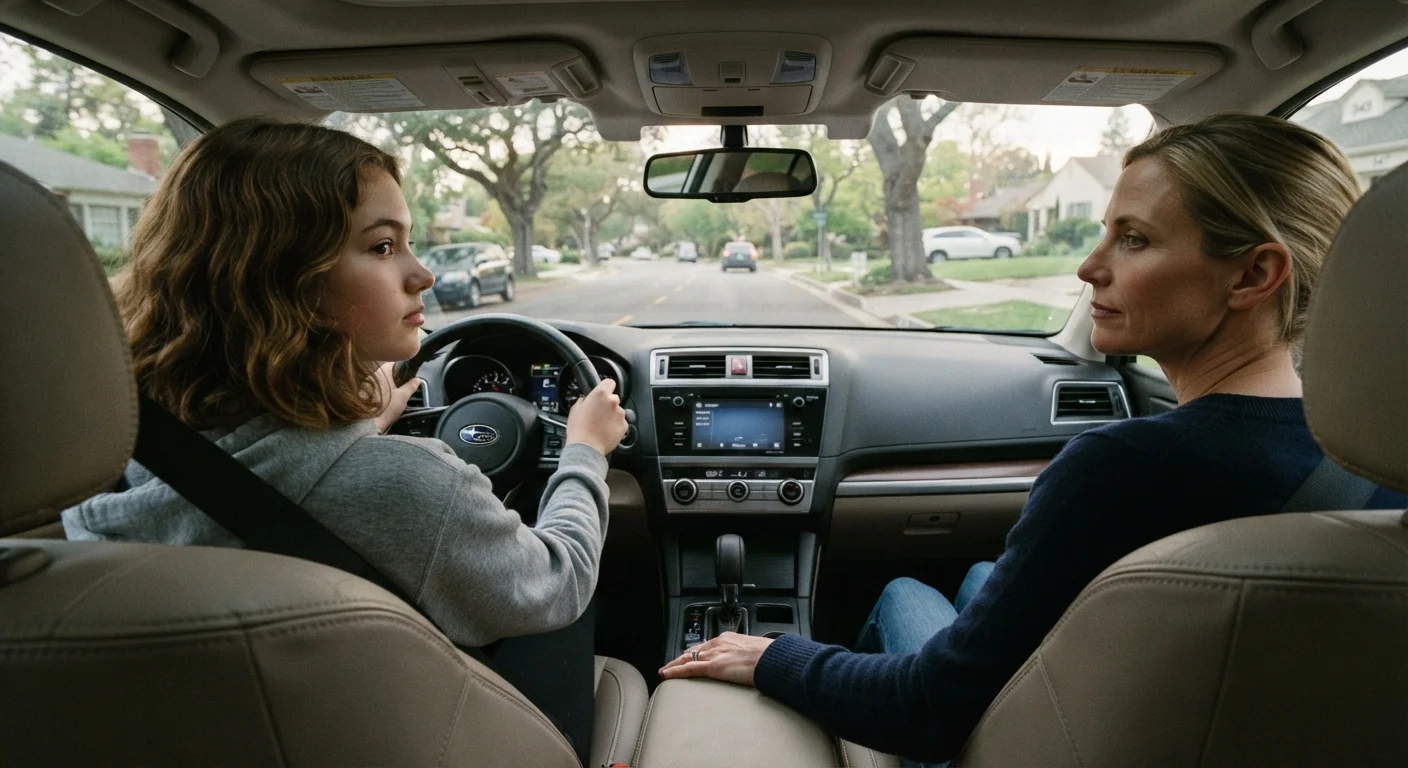
A teen applies for a learner's permit after passing a written knowledge test. During this phase, all driving must occur with a licensed adult supervisor in the vehicle — typically a parent, guardian, or licensed driver above a state-specified age. Most states require a minimum number of supervised driving hours, often between 40 and 65 hours, including a designated portion at night. This phase typically lasts at least six months.
Stage 2: Intermediate (Provisional) License
After completing the learner phase and passing a road skills test, the teen advances to an intermediate or provisional license. This allows unsupervised driving but with significant restrictions. The most common include nighttime curfews — often prohibiting driving between 11 p.m. and 5 a.m. — and limits on carrying non-family teen passengers. These targeted restrictions address the specific situations where crash rates spike among new drivers.
Stage 3: Full Unrestricted License
Once the driver has held an intermediate license for the required period (often six months to a year), met any age minimums, and maintained a clean record, they become eligible for a full, unrestricted license. The minimum age for a full license is commonly 17 or 18, depending on the state.
Why Restrictions Exist — and What the Research Says
Teen drivers are statistically overrepresented in traffic crashes relative to their share of licensed drivers. Crash risk is highest in the first months of independent driving, and certain conditions make that risk significantly greater.
Nighttime driving reduces visibility and reaction time for all drivers, but is especially hazardous for those still developing hazard-perception skills. Our guide to night driving visibility covers how even experienced drivers can overestimate how far their headlights illuminate.
Peer passengers are among the strongest risk multipliers for teen drivers. Research has consistently shown that crash risk increases as the number of teen passengers in the vehicle rises, largely due to distraction and social pressure.
Distracted driving — particularly involving mobile phones — is addressed through restrictions that appear in many state GDL programs, often banning all handheld and hands-free device use for drivers under 18.
Violations Can Delay Full Licensure
In many states, a traffic citation or at-fault collision during the intermediate license phase will reset or extend the restricted period — meaning a teen may need to wait longer before qualifying for a full license. The consequences vary by state and offense, so understanding the rules upfront is important.
Understanding these risk factors is also central to defensive driving principles — a mindset that helps any driver anticipate hazards before they develop.
How GDL Varies by State
While the three-stage structure is common nationwide, the details within each stage differ considerably. Key variables include:
- Minimum permit age: Ranges from 14 in some states to 16 in others.
- Required supervised hours: Varies from as few as 20 hours in some states to 65 or more in others.
- Nighttime curfew start time: Some states set curfews as early as 9 p.m.; others begin at midnight.
- Passenger restrictions: Most states restrict non-family teen passengers during the intermediate phase, but the age limits and time frames vary.
- Cell phone policies: Some states ban all phone use for GDL holders; others only prohibit handheld devices.
The Insurance Institute for Highway Safety (IIHS) maintains a comprehensive, publicly accessible comparison of GDL laws by state — a useful starting point for families wanting to understand what their specific state requires.
Once a teen earns a full license, reviewing foundational rules — such as those covered in speed limits, right-of-way, and lane rules — helps reinforce safe habits from the start.
Check Your State DMV Directly
GDL laws are updated periodically by state legislatures. Before making any decisions based on age minimums, required hours, or restriction timelines, verify the current rules directly with your state's Department of Motor Vehicles (DMV) website. Third-party summaries can lag behind legislative changes.
Tips for Teens and Supervising Parents
GDL programs set the legal floor, but the quality of supervised practice matters enormously. A few practical considerations:
For Teens
- Use the permit phase deliberately — seek out varied conditions including highways, rain, and unfamiliar routes rather than repeating the same comfortable routes.
- Treat every restriction as a skill-building boundary, not merely a legal one. Nighttime and peer restrictions exist because those are the situations where new drivers most often struggle.
- Understand the traffic laws that apply in your state before testing. Familiarity with right-of-way rules, lane discipline, and signaling expectations builds confidence and reduces errors.
For Supervising Parents and Guardians
- Provide calm, specific feedback rather than reactive corrections. A relaxed learning environment leads to better skill retention.
- Log supervised hours honestly — the requirement is a minimum, not a target. More practice in varied conditions is better preparation.
- Model the behavior you expect. Teens frequently mirror the driving habits of adults they ride with regularly.
- Establish clear household rules for the intermediate phase that align with — or exceed — state restrictions. Many safety advocates recommend keeping passenger limits and curfews in place even if a teen technically ages out of them.
For deeper context on how to think about risk while driving, the principles behind defensive driving apply as much to new drivers as to seasoned ones.