

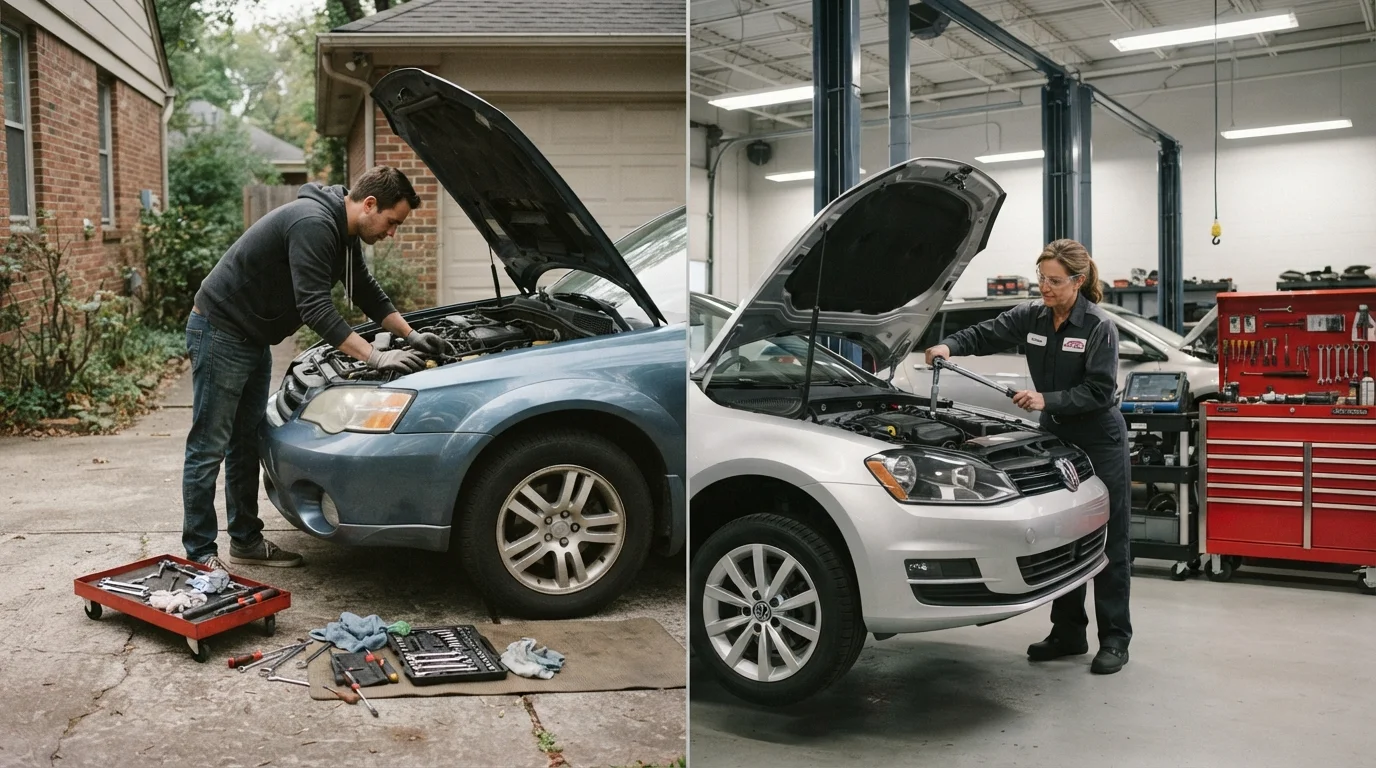
Key Takeaways
- Simple tasks like air filter replacements and wiper swaps are well within most drivers' reach.
- Brake system, suspension, and electrical work carry safety risks and are best left to qualified mechanics.
- DIY savings are real but can be offset by mistakes, wrong parts, or missing underlying problems.
- A professional inspection at least once a year helps catch issues a DIYer might overlook.
- Your vehicle's owner's manual is the most reliable guide to service intervals and specifications.
Lower labor costs on routine tasks
For simple jobs like air filter swaps or wiper replacements, skipping the shop rate can save $50–$100 or more per visit, with minimal risk if instructions are followed carefully.
Builds familiarity with your own vehicle
Regular hands-on maintenance helps drivers notice early signs of wear or leaks that they might otherwise miss between shop visits.
Flexible scheduling on your own timeline
DIY maintenance can be done at home without scheduling appointments or arranging alternative transportation while the car is in a shop.
Satisfaction and skill development
Successfully completing maintenance tasks builds mechanical confidence and can help drivers make better-informed decisions when speaking with a professional.
Safety risk if critical systems are mishandled
Errors in brake, suspension, or steering work can have serious consequences on the road. These systems require both the right tools and verified expertise.
Mistakes can cost more than professional service
An incorrectly installed component — or the wrong part ordered — can create new problems, turning a simple fix into an expensive repair at the shop.
Lack of diagnostic equipment limits accuracy
Professional mechanics have OBD scanners, pressure testers, and alignment rigs that most home mechanics don't own, making accurate diagnosis harder without them.
May void warranty or complicate insurance claims
Some manufacturer warranties require service to be performed by certified technicians; DIY work on covered components can complicate or invalidate a claim.
Our Verdict
DIY maintenance makes sense for straightforward, low-risk tasks where the tools are affordable and the margin for error is small. For anything touching safety systems — brakes, steering, suspension, or advanced electronics — professional service is the more prudent choice. A hybrid approach, handling simple upkeep yourself while scheduling professional inspections regularly, tends to work well for most car owners.
Drivers with basic mechanical confidence who want to reduce routine maintenance costs while still trusting safety-critical work to a qualified mechanic.
Where DIY Makes Practical Sense
Certain maintenance tasks are genuinely accessible to drivers with modest mechanical experience, a few basic tools, and the patience to follow their owner's manual. Replacing engine air filters, swapping cabin air filters, changing wiper blades, topping off fluids, and rotating tires (with proper jack stands and torque specs) are examples where the risk of a serious mistake is relatively low and the cost savings are real.
Oil and filter changes sit in a middle ground. They're straightforward in principle, but require safely lifting the vehicle, working with hot oil, and disposing of used oil responsibly at an approved facility. Drivers who are comfortable with those requirements often handle oil changes without issue — but it's worth noting that some modern vehicles have service reminder systems that still need to be reset afterward, a step that's easy to miss.
Lower labor costs on routine tasks
For simple jobs like air filter swaps or wiper replacements, skipping the shop rate can save $50–$100 or more per visit, with minimal risk if instructions are followed carefully.
Builds familiarity with your own vehicle
Regular hands-on maintenance helps drivers notice early signs of wear or leaks that they might otherwise miss between shop visits.
Flexible scheduling on your own timeline
DIY maintenance can be done at home without scheduling appointments or arranging alternative transportation while the car is in a shop.
Satisfaction and skill development
Successfully completing maintenance tasks builds mechanical confidence and can help drivers make better-informed decisions when speaking with a professional.
For guidance on what service intervals your vehicle actually needs — as opposed to what some common myths suggest — see our look at car maintenance myths drivers keep believing.
When a Mechanic Is the Right Call
Several categories of work carry meaningful safety implications if done incorrectly, and these are areas where professional service is the more prudent choice.
- Brake systems: Pad replacement looks simple, but improper installation can cause brake fade or failure. Calipers, rotors, and brake lines add further complexity.
- Suspension and steering: Worn components affect handling and tire wear in ways that may not be immediately obvious, and alignment requires specialized equipment.
- Electrical and diagnostic work: Modern vehicles rely on interconnected control modules. Misdiagnosis can lead to expensive part replacements that don't solve the root problem.
- Transmission and drivetrain: These systems require precision tooling and, in many cases, specialized knowledge of a specific vehicle platform.
Safety risk if critical systems are mishandled
Errors in brake, suspension, or steering work can have serious consequences on the road. These systems require both the right tools and verified expertise.
Mistakes can cost more than professional service
An incorrectly installed component — or the wrong part ordered — can create new problems, turning a simple fix into an expensive repair at the shop.
Lack of diagnostic equipment limits accuracy
Professional mechanics have OBD scanners, pressure testers, and alignment rigs that most home mechanics don't own, making accurate diagnosis harder without them.
May void warranty or complicate insurance claims
Some manufacturer warranties require service to be performed by certified technicians; DIY work on covered components can complicate or invalidate a claim.
Even confident DIYers benefit from a professional inspection periodically. A trained technician can spot wear patterns, fluid leaks, or corrosion that might not trigger a warning light but still indicate developing problems. If your vehicle is accumulating significant mileage, see our guidance on keeping a high-mileage car roadworthy.
Weighing the True Costs
The apparent savings of DIY can shrink when you factor in the full picture: tool purchases, time, the risk of incorrect installation, and the cost of any parts ordered in error. A brake job that requires a specialty caliper compression tool, for instance, may cost nearly as much in tools as the labor charge at a shop — at least the first time.
~35%
Share of vehicle repairs attempted by owners
AAA estimates that a significant portion of US vehicle owners attempt at least some maintenance or repair work themselves each year.
$500–$900
Typical annual vehicle maintenance cost at a shop
The American Automobile Association has estimated average annual maintenance and repair costs for US drivers in this range, varying by vehicle age and type.
There's also the matter of liability and warranty. Some newer vehicles have service records tied to warranty coverage, and repairs performed outside a certified shop may affect claims if something goes wrong. Always check your warranty documentation before deciding to DIY a covered repair.
Understanding what you're being charged for is equally important when you do use a shop. Our guide to reading a mechanic's service report breaks down what common terms on a service invoice actually mean, so you can ask informed questions.
This article is for general informational purposes only. Always consult your vehicle's owner's manual and, for safety-critical repairs, a qualified mechanic before performing any maintenance or repair work.