

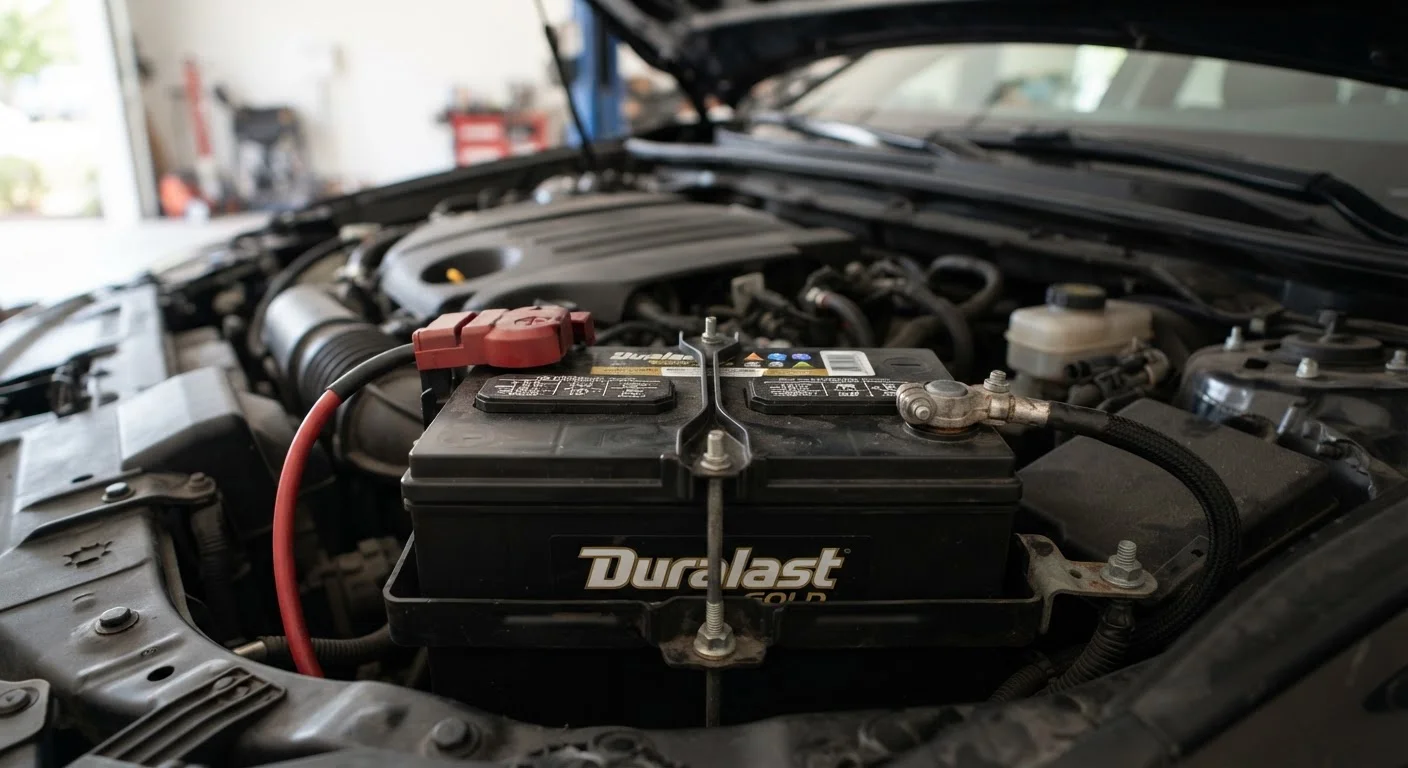
Key Takeaways
- Most car batteries last between three and five years under typical driving conditions.
- Slow engine cranking and dimming headlights are early warning signs of a weakening battery.
- Extreme temperatures — both hot and cold — significantly shorten battery lifespan.
- Frequent short trips prevent the battery from fully recharging, accelerating wear.
- A mechanic can test battery health quickly and inexpensively before problems arise.
Car Battery Health
A car battery's health refers to its ability to hold and deliver the electrical charge needed to start the engine and power vehicle systems. Over time, the battery's internal chemistry degrades, reducing how much energy it can store. A healthy battery starts the car reliably in all conditions; a weakening one may struggle — especially in cold weather or after sitting unused.
Most standard vehicles use a 12-volt lead-acid battery. Health is often measured as "state of health" (SOH), comparing current capacity to the original rated capacity — a figure a mechanic can check with a battery tester.
How a Car Battery Actually Works
Your car battery is a rechargeable unit that performs two main jobs: it supplies the burst of electrical power needed to start the engine, and it supports onboard electronics when the engine isn't running. Once the engine starts, the alternator — a generator driven by the engine — takes over powering the car's systems and recharges the battery at the same time.
The battery itself stores energy through a chemical reaction between lead plates and a sulfuric acid solution. Each charge and discharge cycle gradually degrades those internal components. That degradation is normal and unavoidable, but its pace depends heavily on how you use and care for the vehicle. See also the how the charging cycle works for a deeper look at the alternator-battery relationship.
Early Warning Signs of a Weakening Battery
Batteries rarely fail without warning. Recognizing the early signals gives you time to act before you're stranded.
- Slow engine cranking: If the engine turns over more sluggishly than usual when you start the car — especially after the vehicle has sat overnight — the battery may not be delivering full power.
- Dimming headlights: Headlights that seem noticeably dimmer, particularly at idle, can indicate the battery isn't holding charge well.
- Electrical gremlins: Inconsistent behavior from the radio, power windows, or dashboard display can point to unstable voltage from a fading battery.
- Battery warning light: This dashboard indicator signals a fault in the charging system, which may involve the battery, the alternator, or both.
- Swollen battery case: Excessive heat can cause the battery casing to bulge — a sign the battery should be inspected or replaced by a mechanic promptly.
Get a Free Battery Test Before It Fails
Many auto parts stores and service shops offer free battery testing — no appointment needed. A simple conductance test tells you how much capacity the battery has left. Catching a weakening battery early means you choose when to replace it, not your battery.
If your battery is more than three years old, ask a mechanic to test it at your next service visit. Testing is quick, inexpensive, and can spare you an unexpected breakdown.
What Shortens a Battery's Lifespan
Several common factors accelerate battery wear — many of which are within a driver's control.
3–5 years
Typical car battery lifespan
Industry guidance from automotive engineers and battery manufacturers consistently cites this range for standard lead-acid batteries under normal use.
~50%
Power reduction in extreme cold
Battery output can drop by roughly half at very low temperatures (around 0°F / -18°C), according to general automotive engineering references.
20–30 min
Drive time needed to recharge after starting
Most alternators require this minimum driving duration to replenish the charge used during engine start, according to general automotive guidance.
Temperature Extremes
Heat is actually harder on batteries than cold. High ambient temperatures speed up the internal chemical reactions that cause corrosion and plate degradation. Cold weather, meanwhile, thickens engine oil and increases the power needed to start the engine — pushing a weakened battery past its limits. For a broader look at winter effects on your vehicle, see what cold weather does under the hood.
Short, Infrequent Trips
Every engine start draws a significant charge from the battery. The alternator needs roughly 20–30 minutes of driving to replenish it fully. Drivers who make mostly brief trips — school runs, quick errands — repeatedly draw down the battery without allowing a full recharge. Over time, this partial-cycling pattern degrades capacity. This pattern is also explored in overlooked habits that accelerate vehicle wear.
Parasitic Drain
When the car is off, some systems — like the clock, alarm, and key-fob receiver — draw a tiny, continuous current. This is normal. But a faulty relay, a malfunctioning accessory, or a light left on can create excessive drain that depletes the battery overnight. If you regularly find a flat battery in the morning, a mechanic can test for parasitic draw.
Age
No battery lasts indefinitely. After about three years, capacity begins declining noticeably. By five years, most standard lead-acid batteries are approaching the end of reliable service life, regardless of how well they've been maintained.
How to Extend Battery Life
While degradation can't be stopped, a few straightforward habits can slow it meaningfully.
Trickle Chargers: A Note on Safety
Trickle chargers — also called battery maintainers — are a practical tool for vehicles stored long-term, but they should be used according to manufacturer instructions. Using the wrong charger type or leaving a standard charger unattended can damage the battery or pose a safety risk. When in doubt, ask a mechanic for guidance on the right approach for your vehicle.
- Take longer drives periodically to allow the alternator to fully recharge the battery.
- If a vehicle will sit unused for more than a few weeks, consider using a trickle charger — a low-current device that maintains battery charge without overcharging.
- Keep battery terminals clean and free of corrosion; a mechanic can clean them during routine service.
- Park in a garage when possible to reduce exposure to temperature extremes.
- Have the battery and charging system tested annually once the battery is past the three-year mark.
Understanding battery wear is part of broader vehicle literacy. The car maintenance hub covers many related topics that help keep your vehicle dependable long-term.
This article is for general informational purposes only. For any concerns about your vehicle's battery or electrical system, consult a qualified mechanic.