

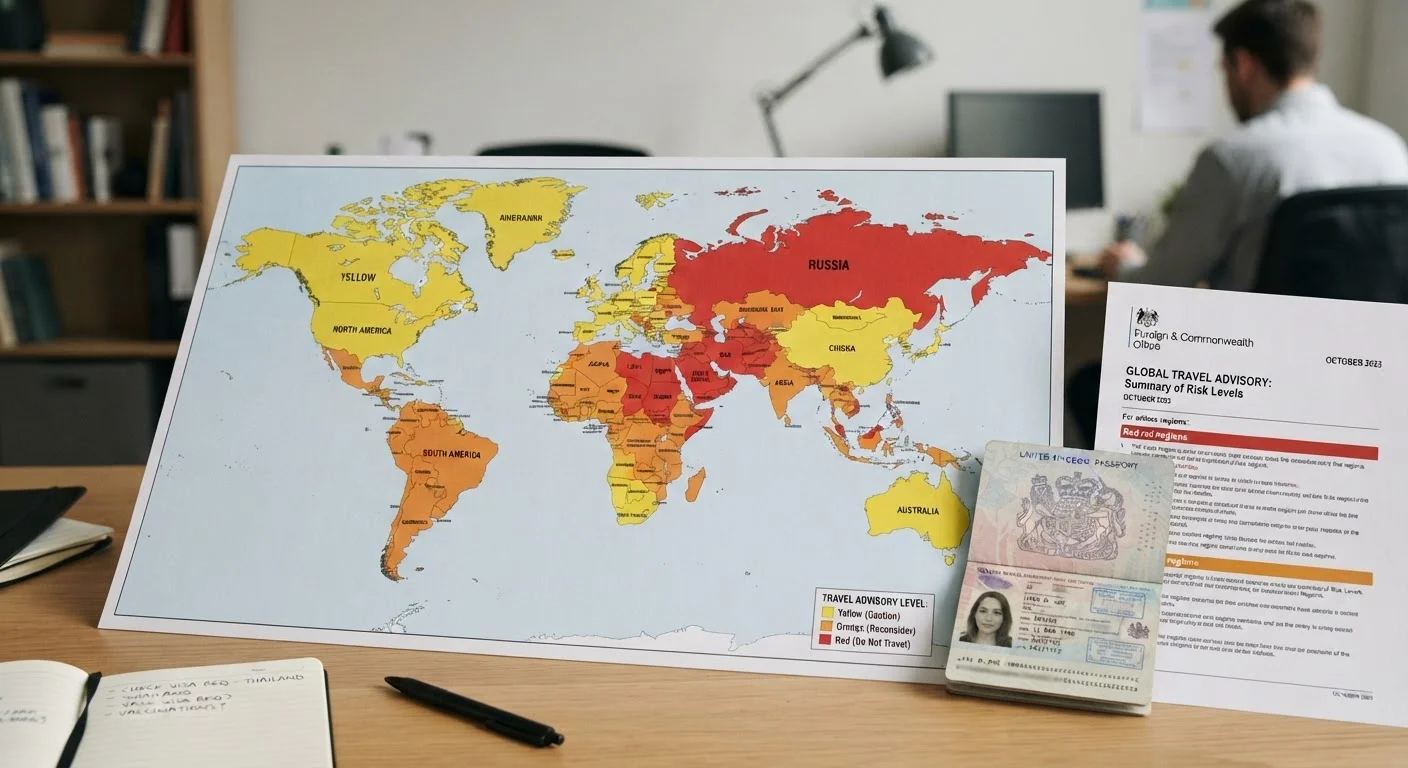
Key Takeaways
- The U.S. State Department uses a four-tier system ranging from Level 1 (Exercise Normal Precautions) to Level 4 (Do Not Travel).
- A Level 2 or 3 advisory does not mean a destination is off-limits — it means specific risks exist that require informed preparation.
- Advisories cover entire countries but conditions often vary significantly by region within a country.
- Advisory levels can change quickly; always check official sources close to your departure date.
- Advisories inform — they do not legally prohibit travel, except in rare circumstances involving passport restrictions.
Travel Advisory
A travel advisory is an official government notice that evaluates safety and security conditions in a foreign country or region. Advisories are organized into numbered tiers that signal the level of caution travelers should exercise. They are issued by agencies such as the U.S. Department of State and are updated as conditions change.
Advisory levels are distinct from entry requirements, visa rules, or health-related notices — each of which may be issued through separate government channels.
The Four-Tier System Explained
The U.S. Department of State issues travel advisories using a straightforward four-level scale. Each level corresponds to a specific type of risk and a recommended response from travelers.
- Level 1 — Exercise Normal Precautions: The lowest advisory level. Standard awareness is sufficient, similar to traveling domestically.
- Level 2 — Exercise Increased Caution: Identifiable risks exist, such as higher crime rates, political tension, or health concerns. Travelers should research conditions and plan accordingly.
- Level 3 — Reconsider Travel: Serious risks are present — including widespread violence, significant health crises, or unstable governance. The government recommends weighing whether the trip is necessary.
- Level 4 — Do Not Travel: The highest advisory. Reserved for countries experiencing active armed conflict, life-threatening dangers, or situations where the U.S. government has limited ability to assist citizens.
These levels are not permanent judgments — they reflect current conditions and are subject to revision. For the most accurate and current guidance, consult official travel safety resources before finalizing any itinerary.
4
U.S. State Department advisory tiers
The U.S. Department of State uses a four-level system to rate travel risk in countries worldwide, from Level 1 (normal precautions) to Level 4 (do not travel).
200+
Countries and territories assessed
The State Department publishes travel advisories for more than 200 countries and territories, each reviewed as conditions evolve.
What Advisories Don't Tell You
A tier number is a starting point, not a complete picture. Several important nuances are often missed by travelers who only glance at the level assigned to a country.
Regional Variation
A country-wide Level 3 advisory may reflect dangers concentrated in one province or border region — while tourist corridors and major cities elsewhere carry conditions closer to Level 1. The full advisory text on travel.state.gov typically includes sub-regional breakdowns. Reading beyond the headline number is essential.
What Advisories Don't Cover
Travel advisories primarily address security and safety risks: crime, terrorism, civil unrest, and armed conflict. They are not a comprehensive source for entry requirements, visa rules, vaccination mandates, or local laws. Those details require separate research through official embassy websites and government health agencies.
Advisories vs. Travel Bans: A Key Distinction
A travel advisory — even at Level 4 — does not legally prohibit most Americans from traveling to a destination. The government recommends against travel but cannot enforce it in most cases. True travel restrictions, such as passport invalidation for certain countries, are rare and separately announced. Always confirm whether a legal restriction is in place versus a strong advisory caution.
Before traveling to any destination with an elevated advisory, consider registering with the Smart Traveler Enrollment Program (STEP) at travel.state.gov. Registration allows the U.S. embassy to contact you in an emergency and provide updated safety information during your trip.
How to Read an Advisory Responsibly
Treating advisory levels as binary — either safe or dangerous — leads to poor decisions in both directions. Some travelers dismiss elevated advisories entirely; others cancel well-researched trips to broadly safe destinations because of a country-level Level 2 rating. Neither approach serves you well.
A more useful framework involves three steps:
- Read the full advisory text, not just the level. Look for specific regions, types of risks, and any travel restrictions the State Department highlights.
- Cross-reference with other sources. The UK's Foreign Commonwealth & Development Office (FCDO) and Canada's travel advisory system offer independent assessments that can add context. See our guide on researching a destination responsibly for a structured approach to vetting travel information.
- Consider your personal risk profile. Your health, itinerary, accommodation type, and travel experience all affect how a given risk environment applies to you. A solo backpacker and a family group face different practical realities in the same destination.
Once you've made an informed decision to travel, shift focus to preparation. Our article on staying safe abroad covers practical steps — from situational awareness to embassy registration — that apply regardless of advisory level.
Check Advisories Within 72 Hours of Departure
Conditions can shift rapidly due to elections, natural disasters, civil unrest, or disease outbreaks. A destination that was Level 1 when you booked could be elevated by the time you depart. Build a habit of rechecking travel.state.gov within a few days of your flight. If the level has changed, contact your airline, insurer, and accommodation to understand your options.