

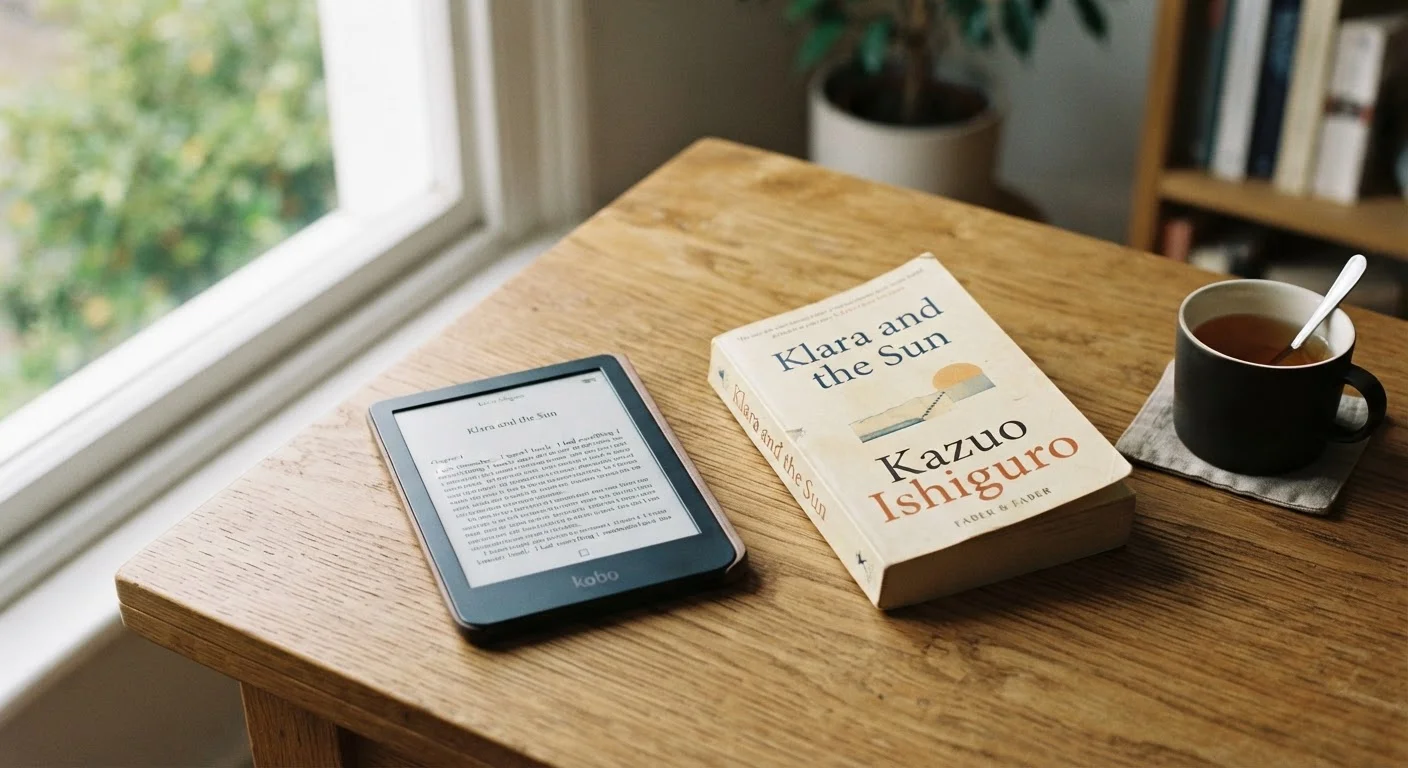
Key Takeaways
- E-ink screens reduce eye strain compared to standard backlit displays, but differ from paper.
- A single e-reader can store thousands of books, dramatically reducing physical clutter.
- Page-turning feel, annotation habits, and navigation all change meaningfully in digital reading.
- Battery life on most e-readers lasts weeks, not hours, unlike tablets or phones.
- Some readers report lower retention or immersion on digital devices — individual results vary.
Stores thousands of books in one lightweight device
Most e-readers hold between 1,000 and 4,000 books depending on file size — eliminating the need for physical shelf space while keeping an entire library portable.
Battery lasts weeks on a single charge
Because E Ink only draws power when the screen refreshes, most e-readers run for four to eight weeks of typical use between charges — unlike tablets or phones that deplete in hours.
Adjustable text size benefits low-vision readers
Font size, typeface, and line spacing can be customized instantly, making e-readers particularly accessible to readers with visual impairments or age-related sight changes.
Built-in lighting works in any environment
Most current e-readers include adjustable front-lighting, allowing comfortable reading in dim rooms, on planes, or in bed without needing a lamp — and without disturbing others nearby.
Instant dictionary lookup while reading
Pressing and holding on a word typically opens a definition immediately, reducing the friction of encountering unfamiliar vocabulary and keeping readers in the flow of a text.
No tactile page-turning or physical feedback
The physical sensation of pages — weight shifting in your hands, the sound and feel of turning — is completely absent. For many long-term print readers, this is the hardest part of the adjustment.
Upfront cost before reading a single book
Unlike buying a single paperback, an e-reader requires a device purchase before any books are accessed. Depending on the device, this initial investment may take time to offset through lower digital book prices.
Lending, gifting, and resale are heavily restricted
Most digital books are licensed rather than owned outright, meaning you cannot freely lend them to a friend, give them away, or resell them — rights that physical books carry automatically.
Some readers report reduced comprehension or immersion
Research on digital versus print reading has produced mixed results, but some studies suggest readers process complex or emotionally rich texts differently on screens. The effect varies significantly by individual and reading type.
Dependence on charge and device function
A dead battery or a software issue renders your entire library inaccessible — a scenario that simply cannot happen with a paper book.
Our Verdict
E-readers genuinely transform the reading experience — not always for the worse, but always differently. The convenience gains are substantial, especially for frequent readers or travelers, while the losses tend to center on tactile satisfaction and reading immersion. Understanding both sides helps you set realistic expectations rather than being surprised by the adjustment.
Readers who consume books frequently, travel often, or struggle with physical storage will benefit most from switching to an e-reader.
How the Screen Actually Feels to Read
The most immediate difference when switching to an e-reader is the screen itself. Most dedicated e-readers use E Ink technology — a display that reflects light rather than emitting it, much like ink on paper. This is fundamentally different from a tablet or phone screen, which shines light directly into your eyes.
In practice, E Ink feels noticeably less fatiguing during long reading sessions, particularly in bright daylight where standard screens wash out. The trade-off is response speed: E Ink refreshes more slowly, which is barely noticeable while reading prose but can feel sluggish when navigating menus or flipping through a library.
The experience isn't identical to paper — text edges appear slightly different under certain lighting, and the grey background of most E Ink displays takes a brief adjustment period. Most readers adapt within a few sessions.
E-Readers vs. Tablets: Not the Same Thing
Many readers conflate e-readers with tablets, but they are distinct devices. Tablets use LCD or OLED screens — the same technology as smartphones — and are designed for general-purpose computing including video, apps, and browsing. Dedicated e-readers run E Ink displays optimized specifically for text, with far longer battery life and less visual fatigue for reading. If you find tablet screens tiring for books, an e-reader is a genuinely different experience worth trying separately.
What You Gain: The Practical Upsides
Switching from print delivers several concrete advantages that compound over time.
Stores thousands of books in one lightweight device
Most e-readers hold between 1,000 and 4,000 books depending on file size — eliminating the need for physical shelf space while keeping an entire library portable.
Battery lasts weeks on a single charge
Because E Ink only draws power when the screen refreshes, most e-readers run for four to eight weeks of typical use between charges — unlike tablets or phones that deplete in hours.
Adjustable text size benefits low-vision readers
Font size, typeface, and line spacing can be customized instantly, making e-readers particularly accessible to readers with visual impairments or age-related sight changes.
Built-in lighting works in any environment
Most current e-readers include adjustable front-lighting, allowing comfortable reading in dim rooms, on planes, or in bed without needing a lamp — and without disturbing others nearby.
Instant dictionary lookup while reading
Pressing and holding on a word typically opens a definition immediately, reducing the friction of encountering unfamiliar vocabulary and keeping readers in the flow of a text.
Storage alone changes how many readers approach their habits. Carrying an entire reading list on a device lighter than most paperbacks makes e-readers particularly useful for travel — a subject worth exploring if you're planning a longer trip where packing space matters.
~6 weeks
Typical e-reader battery life
Most major e-reader manufacturers cite battery life of four to eight weeks under standard reading conditions, based on product specifications.
1,000+
Books storable on a single device
Standard e-reader storage capacities allow most users to carry a library that would fill multiple bookshelves, based on average e-book file sizes.
What You Lose: The Real Drawbacks
The switch isn't without genuine costs, and being honest about them helps readers make an informed decision rather than an impulsive one.
No tactile page-turning or physical feedback
The physical sensation of pages — weight shifting in your hands, the sound and feel of turning — is completely absent. For many long-term print readers, this is the hardest part of the adjustment.
Upfront cost before reading a single book
Unlike buying a single paperback, an e-reader requires a device purchase before any books are accessed. Depending on the device, this initial investment may take time to offset through lower digital book prices.
Lending, gifting, and resale are heavily restricted
Most digital books are licensed rather than owned outright, meaning you cannot freely lend them to a friend, give them away, or resell them — rights that physical books carry automatically.
Some readers report reduced comprehension or immersion
Research on digital versus print reading has produced mixed results, but some studies suggest readers process complex or emotionally rich texts differently on screens. The effect varies significantly by individual and reading type.
Dependence on charge and device function
A dead battery or a software issue renders your entire library inaccessible — a scenario that simply cannot happen with a paper book.
The screen engagement question is worth taking seriously. Some research suggests that on-screen reading can affect how deeply information is processed, though findings vary across study designs and reader types. If you're concerned about your broader relationship with screens, the trade-offs of digital reading habits are worth considering alongside this decision.
Habits That Need to Be Rebuilt
Beyond preferences, certain reading behaviors simply work differently on an e-reader and need to be relearned rather than abandoned.
Annotations and highlights move from pen and paper to an on-screen keyboard or touch gestures. Many readers find digital highlights are easier to search later but harder to write in the moment. Some e-readers support Bluetooth keyboards or stylus input, which helps.
Navigation changes significantly. Flipping to a specific page, glancing at how far you are through a chapter, or quickly referencing an earlier passage all require deliberate action on an e-reader rather than an instinctive physical gesture. Progress indicators and chapter lists help, but the spatial memory that paper readers rely on — remembering something happened "near the top-right page about halfway through" — largely disappears.
Setting up the device itself is a one-time hurdle. If you haven't configured a new digital device before, the process of setting up a new device shares many similarities with e-reader setup, including account linking and privacy choices worth paying attention to.