

Key Takeaways
- Introducing grooming tools gradually reduces stress for both pets and owners.
- Short, positive sessions are more effective than infrequent marathon grooming attempts.
- Nail trimming is the most anxiety-prone task — patience and proper tools make a significant difference.
- Bathing frequency varies by species, coat type, and lifestyle; over-bathing can irritate skin.
- Recognizing stress signals early allows you to pause before a pet becomes reactive.
What you will need
Why Home Grooming Is Worth Learning
Professional groomers are valuable, but regular home grooming is one of the most practical skills a pet owner can develop. It reduces the cost and frequency of salon visits, lets you spot skin issues or lumps early, and — done well — genuinely strengthens your relationship with your pet. If you're new to pet ownership, The New Pet Owner's Complete Starting Point is a solid foundation before diving into grooming specifics.
The biggest barrier most owners face isn't technique — it's their pet's resistance. Dogs and cats that haven't been handled regularly from a young age often find grooming stressful, and that stress can escalate into nipping, scratching, or outright flight. The solution is almost always the same: start smaller, go slower, and pair every tool with something the animal values.
What you will need
Brushing: Frequency, Tools, and Technique
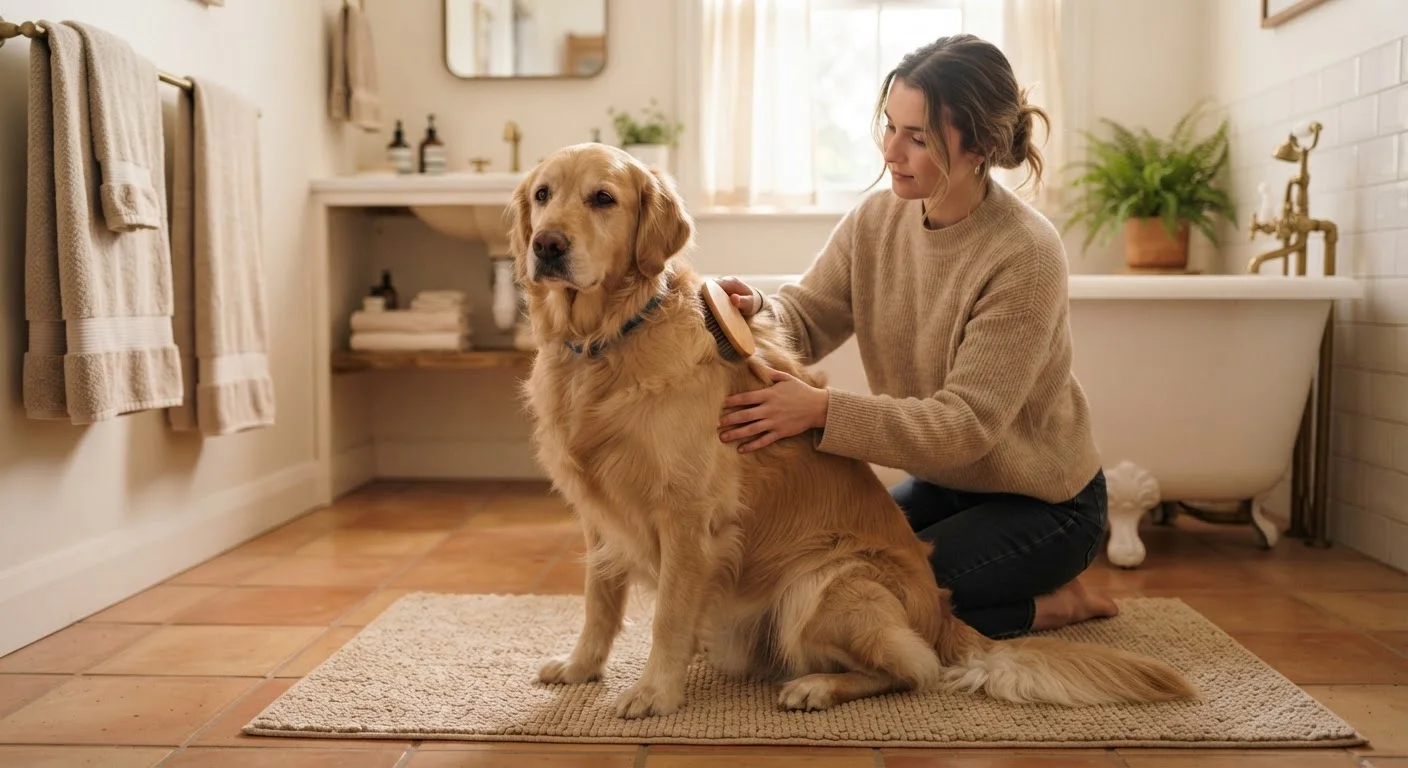
Brushing is typically the easiest grooming task to introduce because it can be done in short bursts without restraint. The right tool depends on your pet's coat: slicker brushes suit medium to long-haired dogs and cats, while rubber grooming mitts work well on short-coated breeds. Double-coated dogs benefit from an undercoat rake during shedding seasons.
For a first session, simply leave the brush on the floor near your pet during a calm moment. Let them sniff and investigate it without pressure. Over several sessions, progress to brief, gentle strokes along the back — the least sensitive area — before moving to the legs, belly, and face. Always brush in the direction of coat growth. Detangling mats requires patience; pulling through them causes pain and damages trust quickly. If mats are severe, consult a professional groomer rather than forcing them out at home.
Building grooming into a predictable daily routine helps pets anticipate and accept it. See Building a Daily Routine Your Pet Can Rely On for practical advice on embedding grooming into your schedule naturally.
Keep Early Brushing Sessions Very Short
Two to three minutes of calm brushing is more valuable than a ten-minute session that ends in resistance. Pets learn through repetition, and a string of short positive experiences builds far more tolerance than occasional long attempts. Aim for daily micro-sessions rather than weekly full grooms whenever possible.
Bathing: When, How Often, and How to Keep It Calm
Most dogs benefit from a bath every four to six weeks, though active or outdoor dogs may need more frequent washing. Cats generally self-groom effectively and rarely need baths unless they've gotten into something harmful or have a medical condition requiring it. Over-bathing — especially with harsh shampoos — strips natural oils and can cause dry, flaky skin, so use only products formulated specifically for pets.
Preparation is everything. Brush out any tangles before water is involved; wet mats tighten and become much harder to remove. Use warm (not hot) water, keep the spray nozzle low and gentle, and avoid directing water into ears, eyes, or nostrils. A non-slip mat in the tub or sink prevents the scrambling that triggers panic. Speak quietly throughout, and have a towel ready to wrap your pet immediately after rinsing — warmth is reassuring.
Avoid Getting Water in Your Pet's Ears
Moisture trapped in the ear canal is a common trigger for ear infections in dogs, particularly those with floppy ears. Place a small piece of cotton wool loosely at the entrance to each ear before bathing and remove it afterward. If your pet shows signs of ear discomfort — head shaking, scratching, or odor — consult your veterinarian.
Nail Trimming: The Task Most Owners Fear
Nail trimming is the grooming task most likely to cause anxiety — for pets and owners alike. Overgrown nails curl into paw pads, alter gait, and can cause pain, so it's worth developing confidence here even if progress is slow. Use a guillotine-style or scissor-style clipper designed for pets; human nail clippers are too thin and can split the nail.
The key risk is cutting the quick — the blood vessel running through the nail. On light-colored nails, the quick is visible as a pink core; on dark nails, clip small amounts at a time and stop when you see a gray or pink oval appear in the center of the cut surface. If you do nick the quick, apply styptic powder or cornstarch to stop bleeding. It looks alarming but is not dangerous.
Begin desensitization by touching your pet's paws regularly during relaxed moments — not grooming time. Graduate to holding the paw, then tapping the clipper against nails without cutting, then trimming a single nail and stopping. Building a Calm, Confident Pet covers the low-stress handling habits that make tasks like this far more manageable over time.
Know When to Defer to a Professional
Some pets have a history of fear or trauma around handling that goes beyond typical resistance. If your pet growls, snaps, or shows signs of extreme distress during grooming, do not push through — seek guidance from a veterinary behaviorist or a certified professional groomer experienced with anxious animals. Attempting to overpower a genuinely fearful animal risks injury to both pet and owner and can deepen the negative association significantly.
Reading Stress Signals and Knowing When to Stop
Grooming should end before a pet reaches its limit — not after. Common stress signals in dogs include yawning, lip licking, whale eye (showing whites of eyes), stiff posture, and a tucked tail. Cats signal stress through flattened ears, tail lashing, skin twitching, and low vocalizations. If you see these, calmly end the session, reward the animal for tolerating what it did, and resume another day.
Forcing through resistance doesn't build tolerance — it builds negative associations that make future sessions harder. Short sessions of two to five minutes with high-value treats are far more productive than a single exhausting attempt. Enrichment on a Quiet Day includes calming indoor activities that can help settle an anxious pet before a grooming session begins.
Slicker brush
Removes loose fur and minor tangles from medium to long coats on dogs and cats.
Rubber grooming mitt
Lifts shed hair from short-coated breeds while providing a massage-like sensation many pets enjoy.
Undercoat rake
Reaches the dense undercoat of double-coated breeds to remove dead fur during shedding seasons.
Pet nail clippers (guillotine or scissor style)
Designed to cut pet nails cleanly without the splitting that human clippers can cause.
Styptic powder
Stops minor bleeding quickly if the nail quick is accidentally nicked during trimming.
Pet-formulated shampoo
Cleanses the coat without disrupting the skin's natural pH balance, which differs from humans.
Non-slip bath mat
Gives the pet stable footing during bathing, reducing panic caused by slipping on a wet surface.