
Prey Drive, Play Drive, and Pack Drive: How Motivational Profiles Shape Dog Behaviour

Key Takeaways
- Dogs are motivated by distinct internal drives — prey, play, and pack — that vary by individual and breed.
- Matching training rewards to a dog's strongest drive produces faster, more durable results.
- High-drive dogs are not difficult dogs — they need structured outlets, not suppression.
- Prey drive, play drive, and pack drive can coexist at different intensities in the same dog.
- Recognising your dog's motivational profile helps explain behaviours that might otherwise seem random or frustrating.
Motivational Drive in Dogs
A dog's motivational drive refers to the internal urges that fuel specific categories of behaviour — such as chasing, playing, or seeking social connection. These drives are rooted in genetics and shaped by breed history and individual temperament. Understanding a dog's dominant drives helps owners predict behaviour, choose appropriate training rewards, and channel energy constructively.
Drive theory in animal behaviour science distinguishes motivational states from reflexes or learned responses. Drives are considered internally generated and relatively stable across contexts, though their expression can be modified through training and environment.
What Drive Theory Actually Means for Dog Owners
When trainers talk about a dog's "drives," they are describing the motivational engines behind behaviour — the internal pull toward certain activities that exists independently of any specific trigger. Drive theory helps explain why one dog will work tirelessly for a thrown ball while another couldn't care less, or why some dogs are glued to their owners while others are off doing their own thing.
Three drives are most relevant to everyday pet ownership: prey drive, play drive, and pack drive. These aren't rigid categories — they overlap and interact — but identifying which drive runs strongest in your dog gives you a practical toolkit for training, enrichment, and problem-solving.
This framework is widely used in working dog training and sport dog communities, and it translates usefully to family pets too. Understanding your dog's motivational profile is especially valuable when choosing a training approach — because a reward only works if the dog actually wants it.
~60%
Dogs responding best to non-food rewards
Surveys of working dog trainers consistently find a substantial proportion of dogs show stronger motivation for toy or social rewards than food in high-arousal situations, underscoring the importance of matching reward to drive.
Top 3
Drives assessed in professional dog sport selection
Prey drive, play drive, and social (pack) drive are the three motivational dimensions most commonly evaluated when selecting dogs for protection sport, search and rescue, and service dog work.
Prey Drive: The Chase Instinct
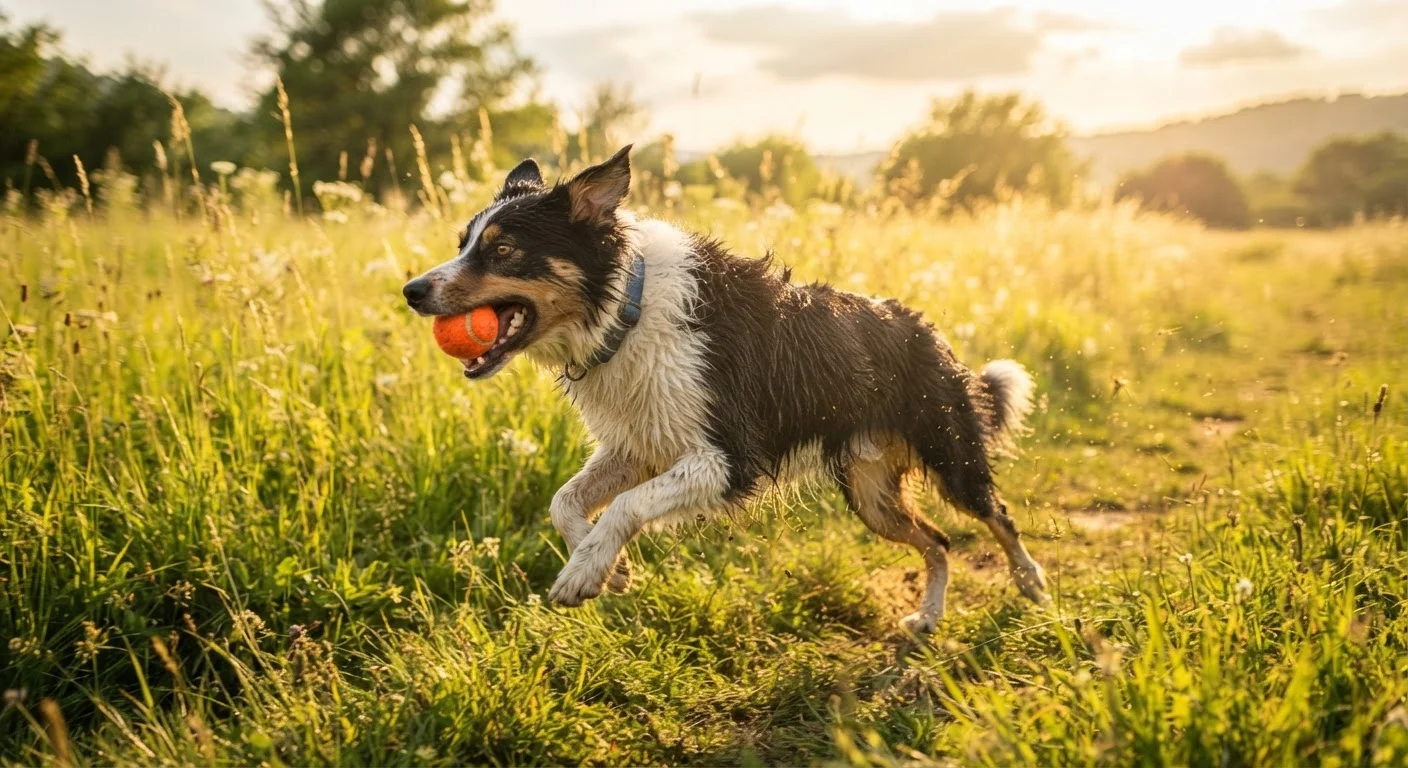
Prey drive is the motivational sequence inherited from ancestral hunting behaviour: orient, stalk, chase, grab, and dissect. Modern domestic dogs rarely complete that full sequence, but the drive itself remains. A dog lunging after a squirrel, fixating on a laser pointer, or shredding a stuffed toy is expressing prey drive in its everyday form.
Breed history matters enormously here. Terriers, sighthounds, and many herding breeds were specifically selected for high prey drive over generations. That drive doesn't disappear in a suburban backyard — it looks for an outlet. Understimulated dogs with high prey drive are significantly more likely to engage in destructive behaviour.
Prey drive can be harnessed in training through tug toys, flirt poles, or chase games. The key is structuring these outlets with clear start and stop cues, so the dog learns impulse control alongside the outlet itself.
Play Drive: Collaboration and Joy
Play drive differs from prey drive in an important way: it is relational. While prey drive can be satisfied solo (chasing a ball the owner threw), play drive is specifically about interactive engagement — the back-and-forth game with another being, ideally you.
Dogs with high play drive are often highly trainable because the training session itself is the reward. These dogs want the social game. They respond readily to enthusiasm, animated handling, and games that make the handler part of the fun. Many sport dog handlers deliberately cultivate play drive because it builds focus and teamwork.
“The dog that plays with you is giving you its most powerful training tool. If you can become more interesting than the environment, you've already won half the battle.”
— Dr. Ian Dunbar, Veterinary behaviourist and pioneer of reward-based dog training
Play drive is generally considered one of the most trainable motivational channels. A dog that will work enthusiastically for a game of tug — regardless of food — is giving you a powerful training lever. Daily interactive play also contributes meaningfully to a dog's overall emotional wellbeing.
Pack Drive: The Need to Belong
Pack drive describes a dog's motivation to seek proximity, cooperation, and connection with its social group — in modern domestic contexts, primarily its human family. Dogs with high pack drive are the ones who follow you from room to room, are highly sensitive to your emotional state, and become visibly distressed by isolation.
This drive is particularly strong in breeds historically developed as companion animals or cooperative working partners — many retrievers, herding breeds, and bully breeds exhibit high pack drive. High pack drive dogs often respond exceptionally well to praise, eye contact, and simply being close to their person as a reward.
Pack drive also has a shadow side: dogs with very high pack drive can be prone to separation anxiety when their social needs aren't met. Rescue dogs adjusting to a new home often display amplified pack-drive behaviours as they seek to establish a sense of belonging and safety.
Recognise Pack Drive in Daily Interactions
If your dog trails you between rooms, checks in visually during off-leash time, or settles only when near you, pack drive is likely dominant. Use this to your advantage in training by making yourself the reward — animated praise, brief play, or simply crouching down for a moment of contact can outperform treats for these dogs. Avoid inadvertently punishing pack-drive behaviour by repeatedly ignoring check-ins, which can build anxiety rather than independence.
Putting the Profile to Work
Once you have a rough sense of your dog's dominant drives, you can use that knowledge practically. Match training rewards to the drive: food works broadly, but a prey-drive dog may light up more for a tug toy; a pack-drive dog may find your enthusiastic praise genuinely motivating. Forcing a reward type that doesn't match the dog's profile produces flat, uninspired responses.
Drives also explain behaviours that owners often label as stubbornness or disobedience. A dog that freezes and stares at a passing cyclist isn't ignoring you — its prey drive has engaged, and that motivational state temporarily overrides competing signals. The answer isn't punishment; it's building enough reinforcement history at lower arousal levels that your cue can compete with the trigger.
As dogs age, their care needs and energy levels shift — understanding how dogs change across life stages helps owners adjust enrichment and training expectations accordingly. A senior dog with lifelong high prey drive may need mentally stimulating outlets rather than physically intense ones, but the underlying motivation hasn't vanished — it just needs age-appropriate expression.
Drive theory isn't a rigid classification system, and professional trainers use it as a starting point for observation rather than a fixed label. If your dog's behaviour feels confusing or challenging, a certified applied animal behaviourist or credentialed trainer can help you build a motivational profile and a training plan to match.