

Key Takeaways
- The first 72 hours are the highest-risk period for territorial conflict between pets.
- Scent introduction before visual contact is a proven first step in multi-pet households.
- Separate feeding stations and sleeping areas prevent resource-guarding from the start.
- Patience and a slow, staged timeline — often one to three weeks — significantly improve long-term outcomes.
- Stress signals in animals are subtle; knowing what to watch for lets you intervene early.
- Persistent aggression or extreme fear warrants guidance from a veterinarian or certified animal behaviorist.
What you will need
Why the First 72 Hours Define the Relationship
Territorial behavior in domestic animals isn't aggression for its own sake — it's a hard-wired survival strategy. When a new animal enters the home, resident pets experience a genuine threat response: their scent markers are being overridden, their predictable environment has changed, and an unfamiliar creature now competes for the same resources. The first three days set the emotional tone for everything that follows.
Dogs and cats process novelty differently. Dogs tend to react immediately and visibly — barking, lunging, or submitting. Cats, by contrast, often withdraw and build resentment quietly before a confrontation becomes apparent. Understanding these patterns, explored further in our article on socialisation and early behavior, helps owners read what's actually happening rather than misinterpreting normal stress as permanent incompatibility.
The good news: most inter-species and same-species introductions can succeed with the right structure. The protocol below is designed around how animals actually process new social information — through scent first, then controlled visual exposure, then gradual shared space.
What you will need
What You'll Need
A few practical items make the difference between a chaotic first week and a managed one. Gather these before the new pet arrives.
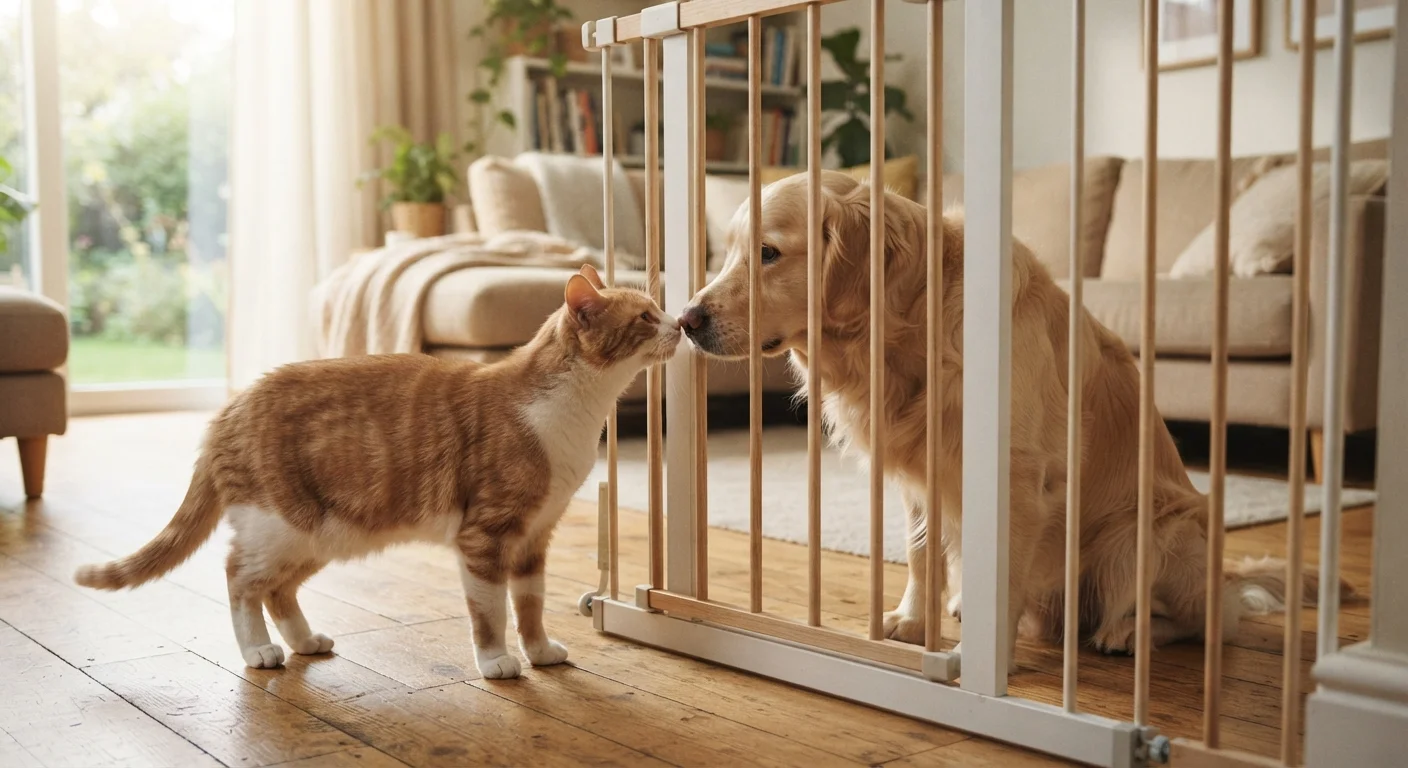
Baby gate or exercise pen
Creates a physical barrier that allows pets to see and smell each other without direct contact during early introductions.
Separate food and water bowls
Prevents resource-guarding conflicts by ensuring each pet has its own dedicated feeding station.
Worn clothing or used bedding
Used for scent swapping — letting each animal investigate the other's smell before any face-to-face meeting.
Interactive toys and treats
Creates positive associations during supervised shared time by redirecting attention and rewarding calm behavior.
Pheromone diffuser (species-specific)
May help reduce ambient anxiety in the home during the adjustment period; consult your vet for guidance on suitability.
The Step-by-Step Introduction Protocol
Follow these steps in order. Rushing any stage — particularly the move from scent introduction to visual contact — is the most common reason introductions fail. If either pet seems overwhelmed at any stage, return to the previous step and allow more time before progressing.
Never Force a Face-to-Face First Meeting
Placing two unfamiliar animals in the same room without preparation dramatically increases the chance of a fight or lasting fear response. The stress from a bad first encounter can set integration back by weeks or permanently damage the relationship between pets. Always work through scent, then visual, then physical introduction phases before allowing unsupervised contact.
Set Up the New Pet's Base Room Before Arrival
Before the new animal enters the home, designate one room as its exclusive starting space. Stock it with food, water, a litter box or waste pad, bedding, and a few hiding spots. This room gives the new pet time to decompress and begin building a sense of safety while your resident pet adjusts to knowing something new has arrived — without direct exposure.
Begin Scent Introduction on Day One
Place a worn t-shirt or a piece of the new pet's bedding near your resident pet's resting area — not on top of its bed, but close enough to investigate freely. Do the reverse: put something carrying your resident pet's scent in the new animal's base room. Allow each pet to approach and retreat on its own terms. Calm investigation without fixation or aggression is a positive sign.
Allow Brief Visual Contact Through a Barrier
Once both animals appear relaxed around each other's scent — typically after two to four days — crack the base room door or introduce a baby gate. Let them observe each other at a distance. Keep sessions short: five to ten minutes is enough. Offer high-value treats to both animals simultaneously so each begins to associate the other's presence with something positive.
Introduce Shared Neutral Space With Supervision
Choose a room that neither pet has claimed as a primary territory — a hallway or open living space works well. Bring both animals in at the same time, keeping them at opposite ends of the room. Stay calm and relaxed yourself; animals are highly sensitive to owner tension. Reward calm, disengaged behavior rather than drawing attention to interactions. Gradually shorten the physical distance over multiple sessions spanning several days.
Establish Permanent Separate Resource Zones
Even as pets begin to tolerate each other, maintain separate feeding stations, water bowls, sleeping areas, and — for cats — litter boxes in different locations. Resource competition is one of the most common drivers of long-term inter-pet conflict. The general guideline for cats is one litter box per cat, plus one extra. Apply the same principle to feeding spots for dogs. See our guide on common feeding mistakes for more on preventing food-related tension.
Expand Shared Time Gradually and Monitor Body Language
Over the following one to three weeks, incrementally increase the duration and frequency of supervised shared time. Watch for relaxed body posture: loose muscles, normal movement, willingness to eat or play near the other animal. Mutual grooming or play solicitation signals that integration is progressing well. Continue to give each pet dedicated one-on-one time with you to prevent jealousy and reinforce individual security.
Routine Is a Stabilizer for Both Pets
Keeping existing routines — walk times, feeding windows, play sessions — consistent during the introduction period reassures your resident pet that its world hasn't been upended. See our guide to building a daily routine for a practical framework you can adapt for a multi-pet home.
Signs the Introduction Is Going Well — and When to Get Help
Progress isn't always linear. Some days will be better than others, and minor setbacks — a hiss, a growl, a retreat — don't signal failure. Positive indicators include: each pet choosing to rest in the same room voluntarily, disinterest replacing hypervigilance, and the ability to eat calmly within sight of each other.
Persistent signs that professional support may be needed include: one pet refusing to eat or hiding for extended periods, escalating rather than diminishing aggression over multiple weeks, or any injury during interactions. A veterinarian can rule out underlying health issues that amplify irritability — pain and illness can make animals less tolerant of social stress. You can find guidance on preparing for those conversations in our vet visit preparation guide.
Know When to Stop and Seek Help
If either animal displays sustained aggression — lunging, biting, or relentless stalking — separate them immediately and consult a veterinarian or certified applied animal behaviorist. Some animals have histories or temperaments that require professional, individualized guidance rather than general protocols.
For new owners navigating both a first and second pet simultaneously, our complete starting point for new pet owners covers the broader foundations of bringing any animal home successfully.