

Key Takeaways
- Removable adhesive products let you hang art and shelves without drilling or damaging walls.
- Peel-and-stick wallpaper and removable tile stickers can transform surfaces and peel off cleanly.
- Furniture arrangement and layered textiles create style impact without touching the walls at all.
- Always read your lease carefully before making any changes, even reversible ones.
- Document your rental's condition with photos before and after decorating for deposit protection.
What you will need
Why Reversible Decorating Is Worth the Extra Thought
Renting doesn't have to mean living with a blank, impersonal space for years. The challenge is finding approaches that satisfy your landlord's requirements and still let you feel genuinely at home. Reversible decorating — using products and techniques that leave no lasting trace — has become a well-established discipline, and the range of products available has grown considerably.
The core principle is simple: anything you add should be able to leave with you. That mindset shifts focus from permanent changes to portable, layered styling. Done thoughtfully, it can be just as visually effective as painting a wall or drilling a gallery of hooks.
Read Your Lease Before You Start
Every tenancy agreement is different. Some landlords prohibit even adhesive hooks; others allow minor modifications with written permission. Review your lease thoroughly and, when in doubt, contact your landlord in writing before making any changes. Keep copies of any approvals you receive.
Before spending anything, it's worth doing a structured assessment of the space. Our practical room audit checklist helps you identify priorities so decorating decisions are intentional rather than reactive.
What You'll Need
What you will need
Adhesive hook and strip system
Hangs frames, lightweight shelves, and objects on walls without nails or screws.
Peel-and-stick wallpaper or contact paper
Adds pattern or colour to a feature wall or inside a cabinet without permanent adhesive.
Large area rug
Covers existing flooring and anchors a furniture arrangement to define zones.
Freestanding shelving unit
Provides display and storage without wall fixings.
Removable tile stickers
Transforms dated kitchen or bathroom tiles with a fresh pattern that peels off cleanly.
Washi tape
Creates decorative borders, frames, or geometric patterns on walls with minimal adhesion.
Step-by-Step: How to Decorate Your Rental Safely
Document the Rental's Existing Condition
Before introducing a single decoration, photograph every room systematically — walls, floors, ceilings, fixtures, and any existing marks or scuffs. Date-stamp the images and store them somewhere secure, such as cloud storage or a dedicated email folder. This evidence protects your deposit by proving you didn't cause pre-existing damage.
Plan Your Layout Before Buying Anything
Sketch a rough floor plan and note your wall measurements, window positions, and any fixed elements like radiators or built-in storage. Deciding where furniture will sit, where you want visual interest, and what zones you're creating saves money and avoids impulse purchases. A room audit checklist is a useful tool at this stage.
Layer Rugs, Textiles, and Furniture for Instant Impact
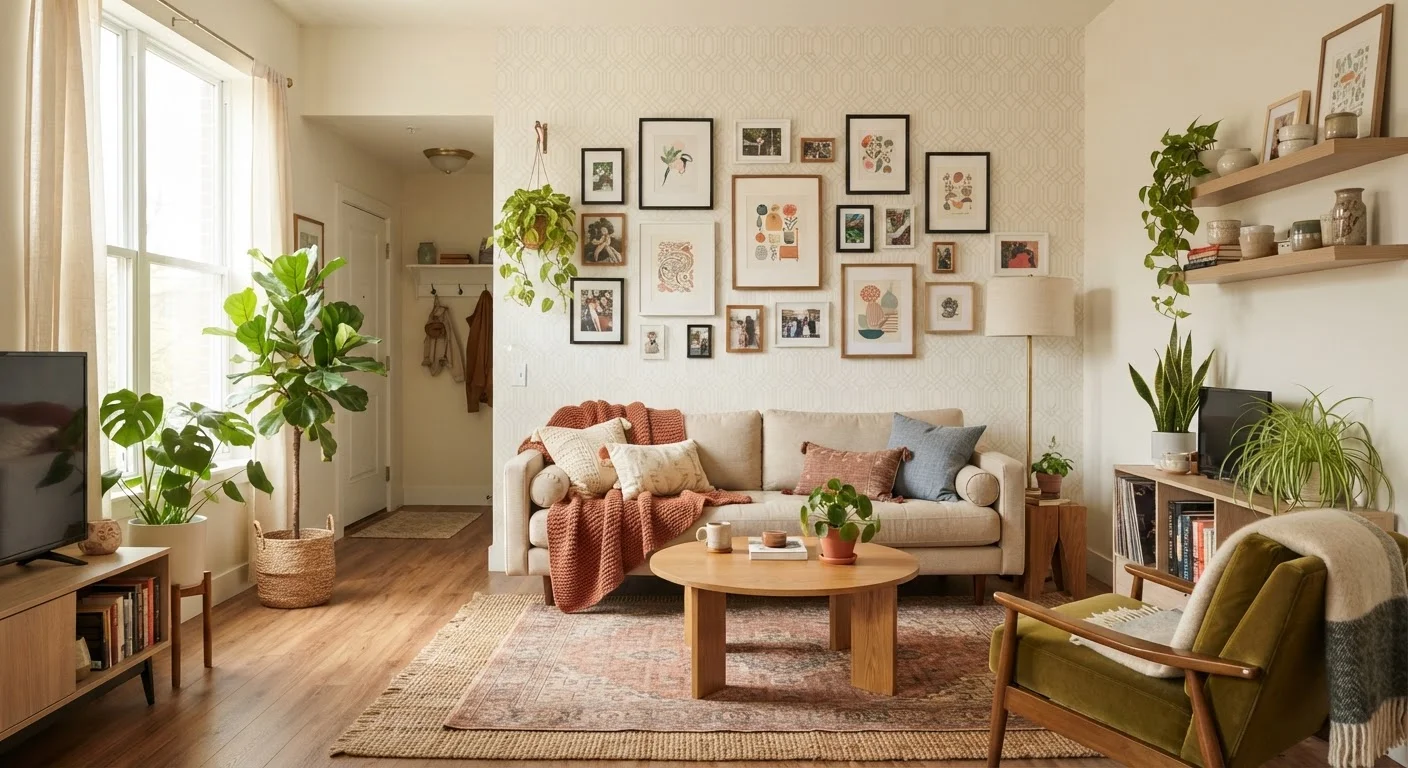
The fastest way to personalise a rental is through elements that never touch the walls. A large rug grounds the seating area and softens hard flooring. Throw cushions, blankets, and curtains hung from a tension rod or existing curtain track add colour and texture. Choose a consistent palette of two to three tones to keep layering from feeling chaotic.
Freestanding bookshelves, clothing racks, and floor lamps contribute structure and personality without a single wall fixing. For awkward corners or underused nooks, consider creative styling approaches for overlooked spaces that rely entirely on freestanding elements.
Use Adhesive Strips and Hooks for Wall Displays
Adhesive wall strips allow you to hang framed prints, lightweight mirrors, and small shelves without nails. Follow the application instructions precisely — surface preparation (clean, dry, grease-free) is critical to both holding power and clean removal. Create a gallery wall arrangement by laying frames on the floor first to test composition before committing to the wall.
Apply Removable Wallpaper or Tile Stickers Strategically
Peel-and-stick wallpaper works well on a single feature wall behind a bed or sofa. Measure carefully, cut panels slightly long, and smooth out bubbles as you go with a flat card or squeegee. When you move out, remove it slowly from a corner using a hairdryer on low heat to soften the adhesive if needed.
In kitchens and bathrooms, removable tile stickers can cover outdated tiles at low cost. Ensure the tiles are spotlessly clean and dry before applying, and check that the sticker product is rated for humid environments.
Restore and Document Before Moving Out
Reverse every change methodically: remove adhesive products slowly, fill any unintended marks with landlord-approved filler if permitted, and clean all surfaces thoroughly. Once the space is restored, photograph every room again using the same angles as your move-in photos to create a clear before-and-after record. This documentation is your most reliable defence if a deposit dispute arises.
Lean Into What You Can't Change
Dated fixtures, neutral magnolia walls, and beige carpets are common rental realities. Rather than fighting them, use accessories — bold cushions, patterned rugs, and warm-toned lamps — to pull the eye away. Embracing the neutral base as a canvas is a shift in mindset that experienced renters swear by. See our guide to popular décor myths for more perspective on what actually creates a stylish room.
Common Pitfalls and How to Avoid Them
Even well-intentioned renters can run into problems. Here are the most frequent missteps and how to sidestep them:
Weight Limits on Adhesive Products Matter
Adhesive hooks and strips are rated for specific weights — exceeding them risks damaging your wall and dropping items. Check the manufacturer's stated weight limit and stay well under it. Heavy mirrors or shelves loaded with books generally need a different solution, such as freestanding furniture.
- Skipping the lease check: Some agreements restrict even picture hooks. A five-minute read now prevents costly disputes later.
- Using the wrong adhesive on textured walls: Heavily textured or limewash-style painted walls don't provide a flat surface for adhesive strips — they're more likely to pull paint on removal. Test first.
- Over-accessorising: Layering too many patterns, colours, and textures can make a small rental feel cluttered. Restraint is a genuine styling skill. If you're questioning your instincts, our article on décor myths that cost you style may reframe the way you approach the space.
- Forgetting vertical space: Tall shelving units, hanging planters, and floor-to-ceiling curtains draw the eye upward and make rooms feel larger without touching a single wall permanently.
Renters who approach decorating with the same intention as homeowners — planning before spending, choosing quality over quantity, and thinking about the whole room rather than individual pieces — consistently achieve the most satisfying results. For further context on the broader renter experience, see the practical differences between renting and owning.