

Key Takeaways
- Growing the same crop in the same spot repeatedly depletes specific nutrients and invites persistent pests.
- Crop rotation works by interrupting the life cycles of soil-dwelling pathogens and insects.
- A simple four-group system — legumes, brassicas, roots, and fruiting crops — suits most home gardens.
- Even small raised-bed gardens can benefit from a basic two- or three-year rotation plan.
- Rotation works best when combined with good soil-building practices like composting and cover cropping.
Crop Rotation
Crop rotation is the practice of moving different plant families to different areas of your garden each growing season. Instead of planting tomatoes in the same spot year after year, you cycle them through different beds on a planned schedule. This breaks pest and disease cycles, prevents nutrient depletion, and keeps soil biologically active.
Formally, crop rotation is organized by plant family (e.g., Solanaceae, Fabaceae, Brassicaceae) rather than individual species, since related plants share the same pests, diseases, and nutrient demands.
Why Planting in the Same Spot Causes Problems
When the same crop grows in the same location season after season, several problems compound over time. Soil-dwelling pests — like root-knot nematodes or Colorado potato beetle larvae — that thrive on a particular plant simply overwinter and find their preferred host exactly where they left it. Disease spores that infected last year's tomatoes persist in the soil, ready to reinfect the next crop immediately.
Nutrition is the other dimension. Different plant families draw on different nutrient reserves. Heavy feeders like brassicas and corn deplete nitrogen and potassium rapidly. Growing them repeatedly in one spot can exhaust those reserves faster than natural processes replenish them, even with regular fertilizing. Understanding this starts with knowing your soil's health and composition before you plant anything.
3–4 years
Recommended gap before replanting same family
Most agricultural extension services recommend a minimum three- to four-year gap to effectively break disease and pest cycles.
Up to 50%
Potential reduction in soilborne disease pressure
Research from university extension programs suggests well-planned rotation can significantly reduce soilborne pathogen populations compared to continuous cropping.
200+ lbs/acre
Nitrogen fixed by legume cover crops annually
The USDA notes that legume crops can fix meaningful quantities of atmospheric nitrogen, reducing synthetic fertilizer needs in subsequent seasons.
The Logic Behind Rotating Crops
Crop rotation interrupts these cycles deliberately. When a pest or pathogen's preferred host disappears from a location, it either dies off, moves on, or fails to reproduce at damaging levels. Rotating a nitrogen-hungry brassica away from a bed and replacing it with a nitrogen-fixing legume like beans or peas actually replenishes what was taken — essentially acting as a natural soil amendment.
The practice also supports microbial diversity. Different root structures and organic matter from varied crops feed different communities of beneficial soil organisms. A garden with diverse rotations tends to have more resilient, biologically active soil over time — which is why rotation is considered foundational, not optional, for vegetable gardening.
“Rotation is fundamentally about managing the biological memory of the soil. Every season you plant the same crop in the same place, you're reinforcing a habitat for everything that wants to eat it.”
— Extension Horticulture Educator, Land-grant university cooperative extension service
A Practical Four-Group System
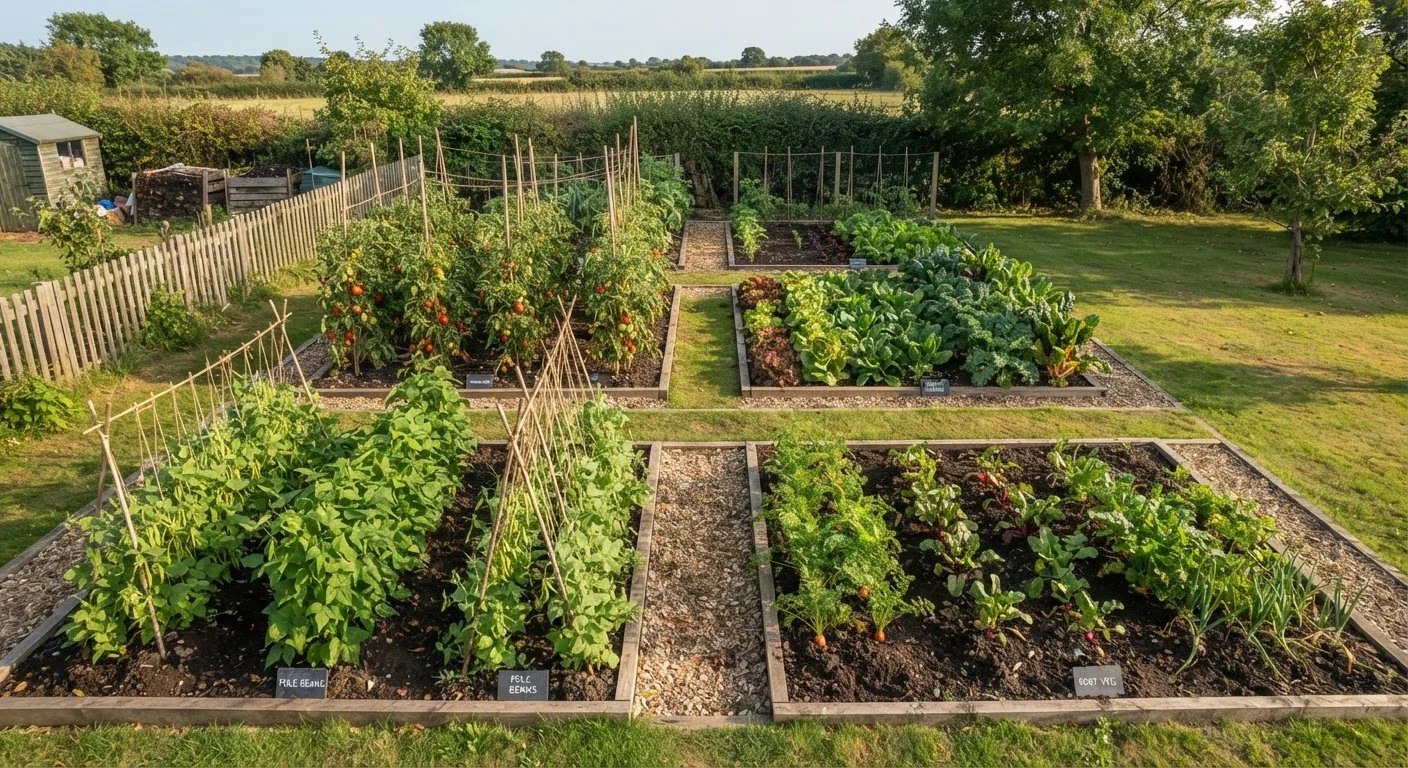
The most widely recommended framework for home gardeners organizes crops into four groups, cycling each through four beds (or zones) on an annual schedule:
- Group 1 — Legumes: Beans, peas, clover. These fix atmospheric nitrogen into the soil, benefiting whatever follows them.
- Group 2 — Brassicas: Cabbage, broccoli, kale, Brussels sprouts. Heavy feeders that do well after a legume year.
- Group 3 — Root crops: Carrots, parsnips, beets, onions. These prefer lower-nitrogen soil and help break up compaction.
- Group 4 — Fruiting crops: Tomatoes, peppers, squash, cucumbers. These are high-demand plants that benefit from rested, composted soil.
Each group moves one position forward each year. After four seasons, every group has passed through every bed. This system pairs naturally with companion planting strategies that can further reduce pest pressure within each bed.
Keep a Simple Rotation Map
At the end of each growing season, sketch or photograph your garden layout and note which crop family grew in each bed. Even a rough hand-drawn diagram stored with your seed packets is enough. Reviewing it each spring takes the guesswork out of planning and helps you avoid accidentally repeating a problematic placement.
Adapting Rotation to Smaller Gardens
You don't need four large beds to practice rotation. Two or three raised beds still allow meaningful movement of plant families. In a two-bed setup, simply alternate heavy feeders (fruiting crops, brassicas) with soil-builders (legumes, root crops) each season. It's less comprehensive than a four-bed cycle, but it still disrupts pest build-up and reduces nutrient exhaustion.
Keep a simple garden journal or sketch — even a basic notebook entry noting what grew where each year. Memory is unreliable across seasons, and records make planning next year's layout straightforward. When you're ready to expand your vegetable-growing approach, starting a vegetable garden from scratch covers how to design beds with rotation in mind from the beginning.
At the end of each season, the transition to winter is also the right moment to record your layout and plan next year's rotation. See our guide on preparing your garden for winter for the full checklist of tasks to complete before cold weather arrives.