

Key Takeaways
- Food can account for roughly 20% of your total daily fluid intake.
- Fruits and vegetables with high water content are among the most effective food-based hydration sources.
- High-sodium and ultra-processed diets can increase fluid losses and heighten hydration needs.
- Certain cooking methods reduce the water content of foods compared to eating them raw or lightly cooked.
- Individual hydration needs vary based on age, activity level, climate, and health status.
- Consulting a healthcare professional is advisable for personalized fluid intake guidance.
Dietary Hydration
Dietary hydration refers to the fluid your body absorbs from the foods you eat, not just the beverages you drink. Many whole foods — particularly fruits and vegetables — contain significant amounts of water that contribute to your daily fluid balance. This means your overall hydration status is shaped by both what you drink and what you eat.
The Institute of Medicine estimates that roughly 20% of total daily water intake in adults comes from food sources, with the remainder supplied by beverages.
Why Food Is Part of the Hydration Equation
Most conversations about hydration focus on how many glasses of water to drink each day. But fluid intake is more nuanced than that. A meaningful share of the water your body uses each day arrives through food — not beverages. Fruits, vegetables, dairy products, and even cooked grains contain water that your digestive system absorbs and your body uses in the same way it uses water from a glass.
Understanding this relationship matters practically. If your diet skews heavily toward dry, processed foods, you may be absorbing less fluid through eating than someone whose meals are built around whole, minimally processed ingredients. Conversely, building meals around high-water foods can quietly support your hydration without requiring you to track every sip. This connects directly to building a balanced plate — plate composition affects more than just macronutrients.
~20%
Daily fluid intake sourced from food
According to estimates from the Institute of Medicine, roughly one-fifth of total daily water intake in adults comes from food rather than beverages.
96%
Water content of cucumber by weight
Cucumbers are among the most water-dense whole foods commonly eaten, making them one of the most efficient food-based hydration sources available.
75%
Water content of cooked oatmeal
Cooked grains like oatmeal absorb significant water during preparation, making a warm bowl of oats a more hydrating breakfast than many dry alternatives.
Foods That Contribute the Most Fluid
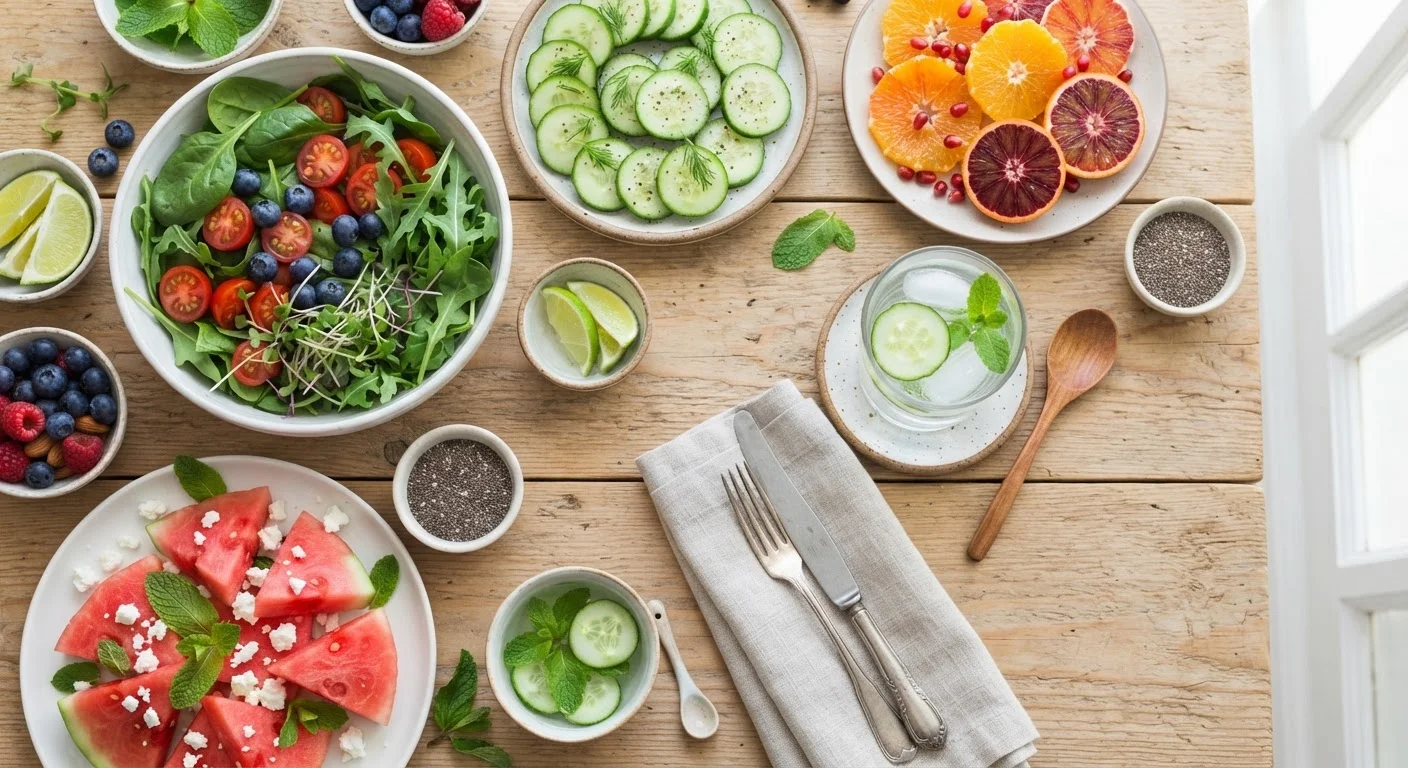
Water content varies widely across food groups. At the top of the scale are raw fruits and vegetables, many of which are more than 90% water by weight. Cucumbers, iceberg lettuce, celery, tomatoes, zucchini, watermelon, strawberries, and cantaloupe are reliable examples. These foods contribute both hydration and micronutrients, making them efficient nutritional choices.
Dairy products such as plain yogurt and milk also have high water content, as do cooked grains like oatmeal and rice, which absorb water during preparation. Soups and broths deserve particular mention: because the liquid they're cooked in is consumed along with the food, they can be one of the most effective meal-based hydration strategies, especially in cooler months when cold beverages are less appealing.
Add Hydration to Your Plate Intentionally
Try anchoring one meal a day around a high-water food — a broth-based soup, a cucumber-tomato salad, or fresh melon as a side. Over time, these small additions create a consistent background level of food-sourced hydration that complements your beverage intake without requiring extra tracking.
Eating Patterns That Can Undermine Hydration
Just as some foods support fluid balance, certain dietary patterns work against it. Diets high in sodium — common in ultra-processed foods, cured meats, fast food, and packaged snacks — increase the kidneys' water demands, raising overall fluid needs. If fluid intake doesn't keep pace, the result can be a persistent mild deficit that affects energy levels and cognitive function.
High-protein diets also increase the kidney's workload for excreting nitrogen byproducts, which can raise fluid requirements modestly. This doesn't mean high-protein eating is inherently problematic, but it does underscore the importance of conscious fluid intake alongside dietary changes. Alcohol and excess caffeine can further complicate the picture, though the dehydrating effect of moderate caffeine is often overstated in otherwise healthy adults.
Hydration needs also shift meaningfully across life stages — a point explored in depth in our overview of nutrition across life stages.
Thirst Is Not Always a Reliable Signal
By the time you feel thirsty, your body may already be mildly under-hydrated. This is especially relevant for older adults, whose thirst mechanisms tend to become less sensitive with age, and for people who are physically active in warm environments. Relying on diet and consistent fluid habits — rather than thirst alone — is a more reliable strategy. Speak with a healthcare professional if you have concerns about your hydration status.
Practical Ways to Support Hydration Through Food
You don't need to overhaul your diet to use food more effectively for hydration. A few consistent habits make a significant difference. Start meals with a broth-based soup or a salad of high-water vegetables. Choose whole fruit over juice, which concentrates sugars while losing some of the structural water. Add sliced cucumber, tomato, or leafy greens to sandwiches and wraps as a simple upgrade.
Pay attention to how cooking affects water content: roasting or air-frying vegetables concentrates their flavor but reduces moisture, while lightly steaming or eating them raw preserves it. For anyone monitoring hydration carefully — athletes, older adults, or people in hot climates — keeping a varied, plant-forward diet provides a meaningful baseline before beverages are even counted.
Individual fluid needs vary considerably, and no universal number applies to everyone. If you have questions about your specific hydration requirements, a registered dietitian or your primary care provider is the right resource.
This article is for general informational and educational purposes only and is not a substitute for professional medical or dietary advice. Always consult a qualified healthcare provider for guidance tailored to your individual health needs.