

Key Takeaways
- Children should remain rear-facing until they reach the maximum height or weight limit of their seat.
- Each car seat stage is determined by a child's size and developmental readiness, not age alone.
- A harness chest clip should sit at armpit level — not across the stomach or neck.
- LATCH anchors and seat belts are both acceptable installation methods when used correctly.
- Free car seat inspection stations, run by certified technicians, are available across the US.
Why Car Seat Stages Matter
Motor vehicle crashes remain a leading cause of injury and death among children in the United States. Proper use of child restraint systems — the right seat, used correctly, at the right stage — significantly reduces that risk. Yet studies by the National Highway Traffic Safety Administration (NHTSA) consistently find that a large proportion of car seats are used incorrectly in some way.
The staged system exists because a child's body changes dramatically from infancy through early adolescence. Each stage is engineered to distribute crash forces across the parts of the body best equipped to absorb them at that point in development. Moving a child forward too soon removes protections that can make a critical difference in a collision. This overview walks through each stage and the installation basics that apply across all of them.
For broader vehicle safety knowledge, see the Vehicle Basics hub which covers practical everyday guidance for drivers and families alike.
Stage 1: Rear-Facing Seats
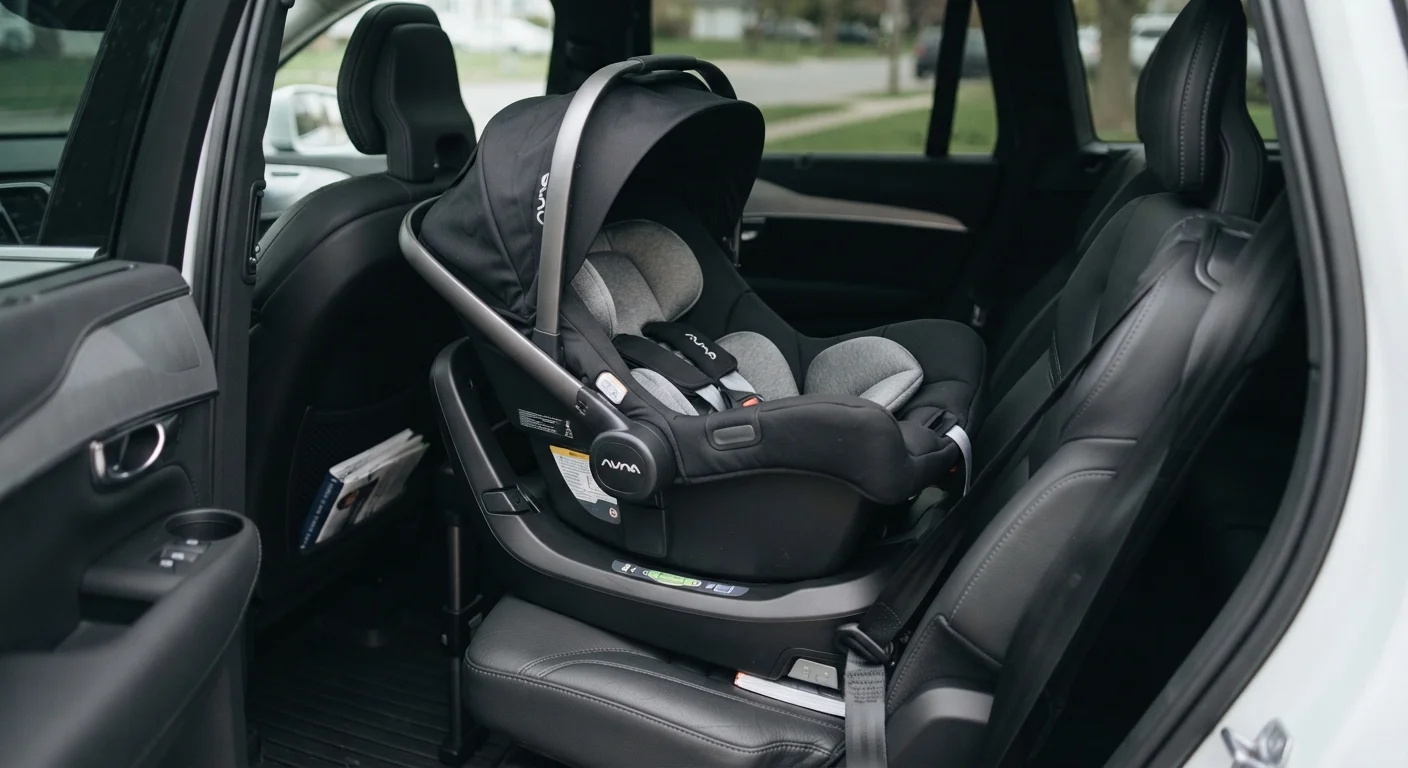
Rear-facing is the starting point for all infants and the safest position for young children. In a frontal crash — the most common and severe type — a rear-facing seat cradles and moves with the child, spreading crash forces across the back, shoulders, and head rather than concentrating them on the neck and spine.
Infant-only seats are designed exclusively for this position and typically accommodate newborns up to a manufacturer-specified weight and height limit. Convertible seats can be used rear-facing first and later converted to forward-facing, allowing children to stay rear-facing longer.
Follow Seat Limits, Not Age Milestones
Many parents assume children should face forward at age two. Current guidance from pediatric and safety organizations recommends keeping children rear-facing until they reach the height or weight maximum printed on their specific seat — regardless of age. Transitioning too early removes meaningful crash protection.
Current guidance from the American Academy of Pediatrics (AAP) recommends keeping children rear-facing until they reach the maximum height or weight limit allowed by their car seat manufacturer — not until a specific birthday. Always follow the seat's label, not a general age rule.
Key rear-facing checks
- The seat reclines at the angle specified on its label (usually 30–45 degrees for newborns).
- Harness straps thread through slots at or below the child's shoulders.
- The chest clip sits level with the armpits.
- The harness passes the pinch test — you should not be able to pinch excess webbing at the collarbone.
Stage 2: Forward-Facing Seats
Once a child has outgrown the rear-facing limits of their seat, they move to a forward-facing seat with a five-point harness. This harness distributes crash forces across five points of the body — shoulders, hips, and between the legs — providing significantly more protection than a seat belt alone for children in this size range.
When transitioning to a forward-facing seat, verify the top tether anchor location in your specific vehicle before installation day — anchor points vary widely and some require routing the strap in non-obvious ways.
The top tether is frequently skipped because parents don't locate the anchor in advance. Finding it ahead of time removes a key barrier to correct use.
Read both the car seat manual and your vehicle owner's manual before installing — conflicts between the two should always be resolved by following the more restrictive instruction.
NHTSA and seat manufacturers both emphasize that the vehicle manual governs how LATCH and tether anchors may be used, and weight limits can differ from vehicle to vehicle.
Most forward-facing seats accommodate children up to 40–65 pounds, though some higher-weight models extend that range. Children should use the harness for as long as the seat's limits allow before transitioning to a booster.
Forward-facing installation notes
- The top tether strap must be attached to the vehicle's designated tether anchor — this reduces head movement by several inches in a crash.
- Harness straps should route through slots at or above the child's shoulders.
- The seat should not move more than one inch side-to-side or front-to-back when tested at the belt path.
Stage 3: Booster Seats
Booster seats bridge the gap between the harnessed forward-facing seat and the vehicle's built-in seat belt. They work by raising the child so the adult seat belt fits correctly — lap belt across the upper thighs (not the stomach), and shoulder belt across the chest and collarbone (not the neck or face).
Seat Belts Are Not Designed for Small Children
A standard vehicle seat belt is designed for adults and older adolescents. On a child who has not yet reached proper belt-fit, the lap portion can ride across the abdomen and the shoulder belt across the neck — both of which can cause serious internal injuries in a crash. Never allow a child to slip the shoulder belt behind their back or under their arm.
There are two types: high-back boosters, which provide head and neck support and are recommended when the vehicle seat lacks a headrest; and backless boosters, which are appropriate for older, larger children in vehicles with adequate headrests.
Children should remain in a booster until the vehicle seat belt fits them properly without it — typically when they are around 4 feet 9 inches tall, though this varies by child. Most states have laws specifying minimum age, weight, or height requirements for booster use. Families planning long trips can find additional practical guidance in our article on travelling with children on long drives.
Installation Fundamentals
A car seat can only protect a child if it is correctly installed in the vehicle. Two approved installation methods exist in the US:
- LATCH (Lower Anchors and Tethers for Children)
- Uses dedicated anchors built into the vehicle seat bight — the crease between the seat back and cushion. LATCH has weight limits that include the child and seat combined; check both the vehicle owner's manual and the seat manual for the applicable limit.
- Seat belt installation
- A properly locked vehicle seat belt is equally safe when used correctly. The belt must be routed through the correct belt path (marked on the seat) and locked so the seat does not move more than one inch in any direction.
~46%
Car seats used incorrectly in some way
NHTSA observational studies have found that roughly half of observed car seats had at least one critical misuse.
71%
Reduction in fatal injury risk for infants
According to NHTSA data, properly used infant car seats reduce the risk of fatal injury by approximately 71% compared to no restraint.
Whichever method is used, always attach the top tether on forward-facing seats — it's one of the most commonly skipped steps and one of the most important for limiting head excursion in a crash.
After installation, push down firmly at the belt path and attempt to rock the seat. If it moves more than one inch, reinstall. Many fire stations, hospitals, and community health organizations host free car seat inspection events staffed by NHTSA-certified Child Passenger Safety Technicians (CPSTs). NHTSA's website maintains a searchable locator for these stations.
Common Mistakes and How to Avoid Them
Even well-intentioned parents frequently encounter the same installation and usage errors. Being aware of them is the first step toward avoiding them.
- Loose harness straps: Straps should be snug enough that you cannot pinch excess webbing at the shoulder. Bulky winter coats compress in a crash, creating dangerous slack — dress children in thin layers and place blankets over the harness instead.
- Wrong recline angle: A rear-facing seat that sits too upright can cause a newborn's head to flop forward, restricting the airway. Use the built-in angle indicator or adjuster on the seat.
- Skipping the top tether: Required on all forward-facing seats; always connect it to the vehicle's tether anchor.
- Expired seats: Car seats have expiration dates (typically 6–10 years from manufacture) printed on the seat or label. Materials degrade over time, and older seats may not meet current safety standards.
- Using a secondhand seat with unknown history: Seats involved in moderate to severe crashes should be replaced. If a seat's crash history is unknown, it's safest not to use it.
As children grow into teenagers, the next phase of road safety involves different considerations. Our guide on teen drivers and graduated licensing covers how the US system transitions young people to independent driving.
This article is for general educational purposes only. Always consult your car seat manufacturer's instructions, your vehicle owner's manual, and a certified Child Passenger Safety Technician for guidance specific to your equipment and situation.