

Key Takeaways
- A positive monthly balance can still cause cash-flow stress if income and expenses don't align by date.
- Mapping exactly when money arrives and leaves is the first step to closing timing gaps.
- A small cash-flow buffer — even one or two weeks of fixed expenses — significantly reduces financial stress.
- Staggering due dates and negotiating billing cycles can eliminate many timing gaps without extra income.
- Automation helps, but only when timed correctly to match your actual deposit schedule.
What you will need
Why Timing Is as Important as Totals
You can earn more than you spend in a given month and still overdraft your account. That's not a math problem — it's a timing problem. Cash flow stress happens when a rent payment is due on the 1st, a utility bill hits on the 5th, and your paycheck doesn't arrive until the 10th. The money exists; it just isn't there yet.
This challenge is especially common for people paid biweekly, freelancers with irregular income, and anyone juggling multiple income sources. But even salaried workers on predictable schedules can run into timing gaps when annual expenses — insurance premiums, registration fees, subscription renewals — land unexpectedly. Understanding the difference between your monthly budget balance and your day-to-day cash position is the foundation of managing this well.
For those navigating variable pay, the strategies for budgeting on an irregular income offer additional frameworks worth reviewing alongside the steps below.
What you will need
Steps to Align Your Cash Flow
The following steps build a practical system for identifying and closing the gaps between when money comes in and when it goes out. Each step is small on its own; done consistently, they create a noticeably more stable financial picture.
Build a Cash Flow Calendar
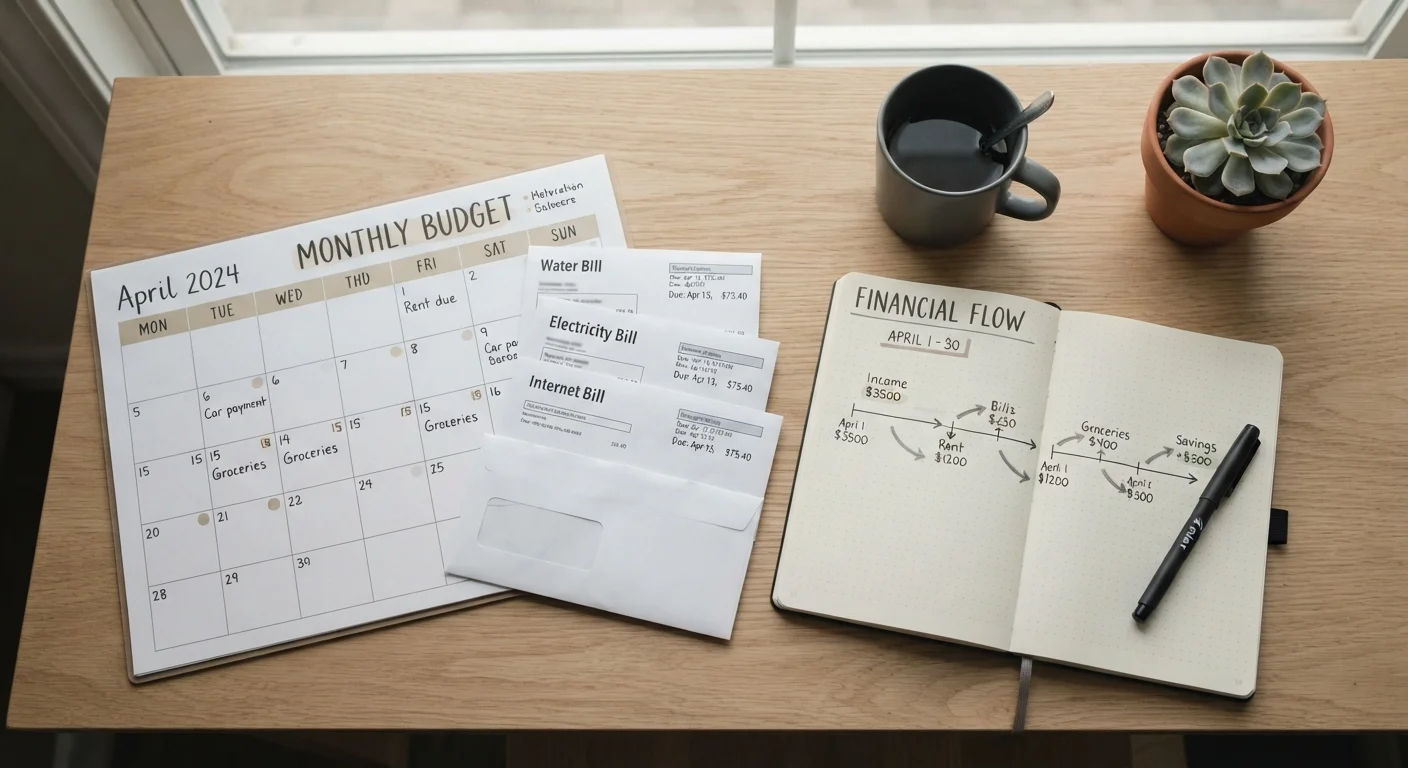
On a blank monthly calendar — paper or digital — mark every expected income deposit with the date and amount. Then mark every fixed expense (rent, loan payment, subscriptions, insurance) with its due date. Use different colors or symbols for inflows and outflows so the pattern is immediately visible.
You are looking for negative gaps: any stretch of days where outflows are clustered before your next income date. These gaps are where overdrafts and late payments originate.
Identify Your Most Vulnerable Days
Review your calendar and circle any date range where your account balance could dip lowest. Common vulnerable windows are the last few days before a paycheck and the first week of the month when rent and utilities often cluster. Note the approximate dollar amount of the shortfall — even an estimate is useful.
This exercise quantifies the problem precisely enough to act on it, rather than living with a vague sense of financial tension.
Request Due Date Changes Where Possible
Many billers — credit card issuers, utility companies, insurance providers — will adjust your billing date upon request, often with a single phone call or online form. Aim to spread large fixed expenses across the month rather than clustering them in the first week.
For example, if rent is due the 1st and your car insurance renews the 3rd, shifting the insurance due date to the 15th (closer to a mid-month paycheck) can meaningfully reduce your early-month exposure.
Build a Small Cash Flow Buffer
A cash flow buffer is a dedicated amount sitting in your checking account (or a linked savings account) that you treat as off-limits for regular spending. Unlike a broader emergency fund, its purpose is specifically to smooth day-to-day timing gaps.
A practical starting target: one to two weeks of fixed expenses. If your fixed monthly costs total $2,000, a buffer of $500–$1,000 absorbs most mid-month gaps. Build it gradually by setting aside a fixed dollar amount from each paycheck until you reach the target. Those building a saving habit alongside variable income will find additional approaches in the guide to building a savings habit on irregular income.
Align Automatic Transfers to Deposit Timing
If you use automatic bill pay or automated savings transfers, verify that each one is scheduled for a date after your paycheck reliably clears. Banks process deposits at different times, and a transfer scheduled for 6 a.m. on payday may execute before the deposit is available.
A conservative rule: schedule automatic outflows at least one full business day after your expected deposit date. Review these settings whenever your pay schedule changes.
Use Your Flow Map as a Living Document
Your cash flow calendar is most useful when it reflects your current reality, not a snapshot from six months ago. Update it whenever a due date changes, a subscription renews, or your income timing shifts. A five-minute monthly update is far less costly than a surprise overdraft.
Maintaining the System Over Time
Building a cash-flow map and buffer is not a one-time fix — it requires a light monthly review to stay accurate. Income timing can shift (a new job, a client paying late), and expenses evolve. A quick end-of-month check against your flow map takes under 15 minutes and catches drift before it compounds. The monthly budget health check checklist is a useful companion for this habit.
If you use automatic transfers for savings or bill pay, verify that each automation is timed after your deposit clears — not before. Misaligned automations are one of the most common causes of unnecessary overdraft fees. For a fuller look at the trade-offs, see what to consider before automating money transfers.
Overdraft Protection Has Real Costs
Many banks offer overdraft protection as a convenience feature, but it typically comes with fees or interest charges that add up quickly. Relying on it as a cash flow strategy can quietly erode your finances. Use it as a last resort, not a substitute for the buffer-building approach described here.
Small, consistent adjustments — shifting one due date, setting aside an extra $25 per paycheck toward a buffer — add up meaningfully over time. These are the kinds of consistent money habits that support long-term financial wellbeing that quietly reduce financial stress without requiring a dramatic income change.
This article is for general informational and educational purposes only and does not constitute personalized financial advice. Consult a qualified financial professional for guidance specific to your situation.