

Key Takeaways
- Most people underestimate their spending by 20–30% before they formally track it.
- Categorizing expenses into fixed, variable, and periodic groups reveals patterns instantly.
- A single month of honest tracking gives you enough data to build a real budget.
- Small, recurring subscriptions and irregular costs are the most commonly missed spending.
- Tracking is not about judgment — it is about clarity and informed decision-making.
What you will need
Why Most People Don't Know Where Their Money Goes
Most of us have a rough sense of our big expenses — rent, car payment, groceries — but day-to-day spending is largely invisible. A coffee here, a streaming upgrade there, a parking fee you forgot about: these small transactions accumulate silently. Research in behavioral economics consistently shows that people tend to underestimate their discretionary spending, often by a significant margin, simply because they never systematically look at it.
The good news is that you don't need a finance degree or a complicated spreadsheet to get a clear picture. You just need a method and about a month of honest observation. If you're completely new to budgeting concepts, the Personal Budgeting From the Ground Up guide covers the foundational vocabulary before you dive into tracking.
What you will need
Tools and What You'll Need
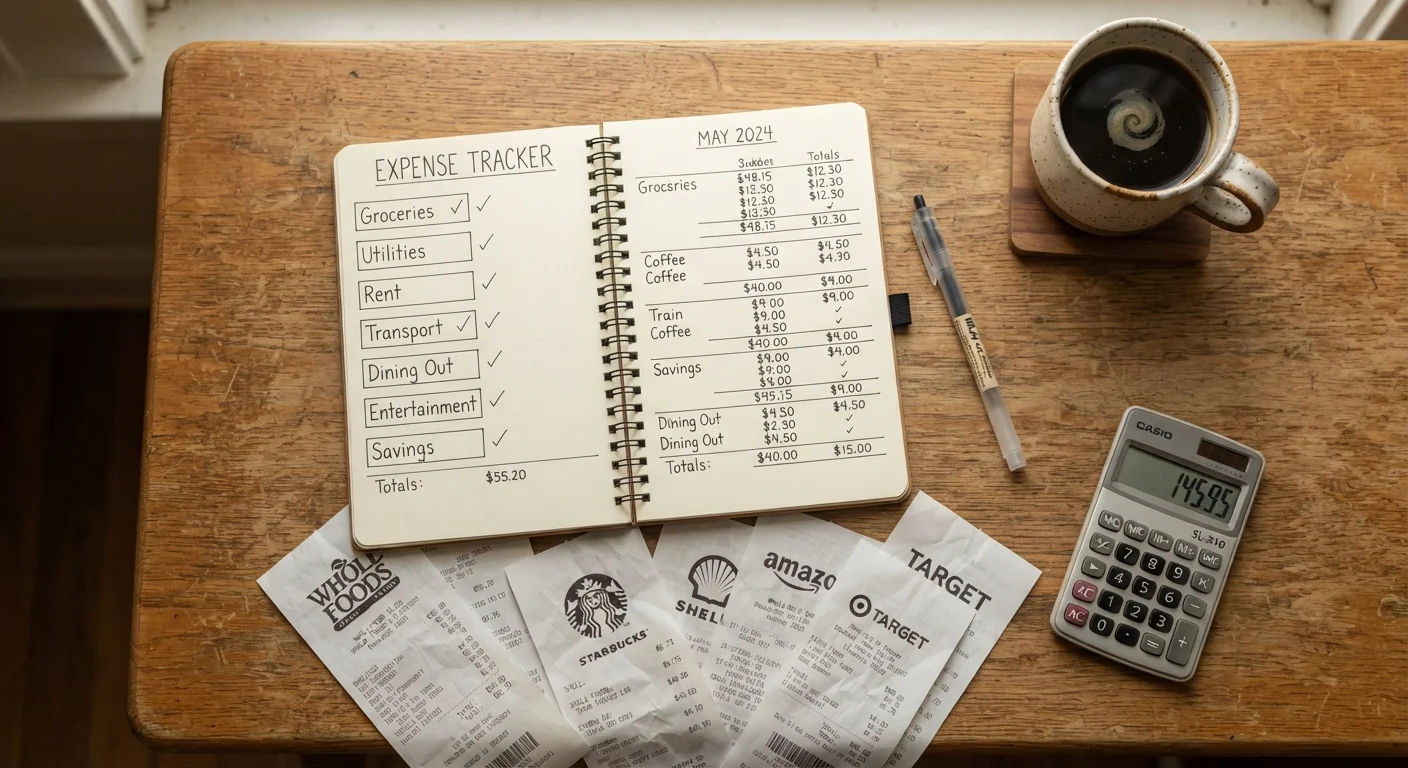
Before you start, gather the resources below. You don't need all of them — pick what fits your habits.
Bank and credit card statements
Provide a complete record of every transaction so nothing is missed or estimated.
Spreadsheet (e.g., a free template in Google Sheets)
Organize income and expenses into categories and automatically calculate totals.
Notebook or paper ledger
A low-tech alternative for those who prefer writing transactions by hand.
Personal finance tracking app
Automates transaction import and categorization to reduce manual data entry.
Calculator
Useful for quickly totaling categories or converting annual costs to monthly equivalents.
How to Map Every Dollar In and Out
Follow these steps over the course of one full calendar month. Consistency matters more than perfection — record what you can, and fill in gaps using statements afterward.
List every source of income
Write down all money coming in during a typical month: take-home pay from each job, freelance payments, government benefits, side-income, or any regular transfers. Use net income (after taxes and deductions) — that's the money you actually have available to spend or save.
Pull every transaction from the past 30 days
Log into each bank account and credit card portal and download or print your statement for the most recent full month. Include cash withdrawals as a single line item. The goal is a complete record — every coffee, every automatic transfer, every ATM fee.
Group every expense into a category
Assign each transaction to a category. Common starting categories include:
- Housing (rent or mortgage, renter's or homeowner's insurance)
- Transportation (fuel, transit passes, car insurance, parking)
- Food (groceries separate from dining out)
- Utilities (electricity, water, internet, phone)
- Healthcare (premiums, copays, prescriptions)
- Subscriptions and memberships
- Personal care and clothing
- Entertainment and hobbies
- Debt repayment (student loans, credit cards beyond minimum)
- Savings and investments
- Miscellaneous
Don't overthink category labels — consistency matters more than perfection.
Total each category and your overall spending
Sum the transactions within each category, then add all category totals to get your grand total monthly outflow. Write both figures — total income and total spending — side by side. The difference (positive or negative) is your net cash flow for the month.
Account for irregular and annual expenses
Identify any regular costs that did not fall in your tracked month — annual software renewals, seasonal utility spikes, holiday spending, car registration, or semi-annual insurance payments. Divide each by 12 and add those monthly equivalents to your totals. This step is what separates an accurate picture from an optimistic one.
One Month Is Enough to Start
You don't need three to six months of data before you act. A single month of careful tracking, adjusted for irregular expenses, gives you a workable baseline. Spending patterns tend to be more consistent than people expect. Refine your picture over time rather than waiting for perfect data.
Once your tracking month is complete, you'll have the raw material for building a monthly budget from scratch. For irregular earners, the approach differs slightly — see budgeting when your income varies each month for adapted strategies.
Reading What Your Numbers Are Telling You
Once you have one month of data, three categories help you interpret it quickly:
- Fixed costs — amounts that don't change (rent, loan payments, insurance premiums). These are predictable but often large.
- Variable necessities — costs you must pay but that fluctuate (groceries, utilities, gas). These respond to behavior changes.
- Discretionary spending — wants rather than needs (dining out, entertainment, subscriptions). This is where most people find the most room to adjust.
Compare your total outflows to your total inflows. If outflows exceed inflows, you now know the size of the gap — and that's powerful information. Don't be discouraged; awareness is the prerequisite for any change.
Avoid Rounding Down Your Spending
It's tempting to mentally discount small purchases when reviewing statements. Resist this — rounding convenience costs from $8 to $0 across dozens of transactions is exactly how spending stays invisible. Record every line item as it actually appears on your statement, no matter how small.
Pay special attention to periodic costs — annual subscriptions, quarterly insurance installments, car registration fees — that didn't happen to fall in your tracking month. Divide each by 12 and add a monthly equivalent so your picture is accurate. The guide to spending categories worth tracking covers many of these easy-to-miss items in detail.
Once you understand your baseline, set a reminder to revisit your numbers monthly. The Monthly Budget Health Check is a practical checklist that helps you catch drift before it becomes a problem.
This article provides general financial information for educational purposes only and does not constitute personalized financial advice. Consider consulting a qualified financial professional for guidance specific to your circumstances.