

Key Takeaways
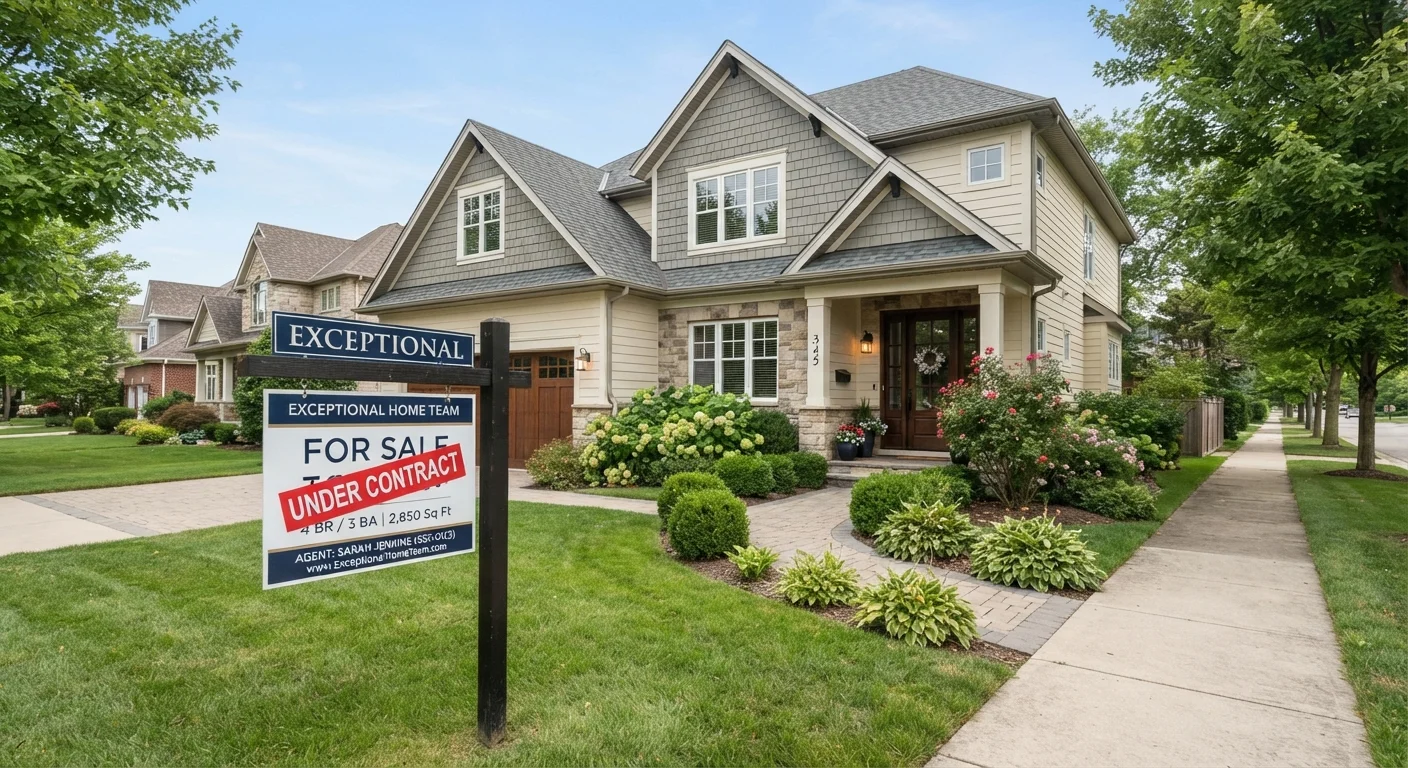
- 'Under contract' means an offer has been accepted but the sale is not yet finalized.
- The deal can still fall through if contingencies — like financing or inspection — are not satisfied.
- 'Pending' typically signals fewer obstacles remain than 'Active Under Contract' or 'Contingent.'
- Buyers can sometimes still submit backup offers on under-contract homes.
- Understanding listing statuses helps buyers act strategically rather than assume a home is permanently unavailable.
Under Contract
'Under contract' means a seller has accepted a buyer's offer on a property, and both parties have signed a purchase agreement. The home is no longer actively being marketed, but the sale has not yet officially closed. The deal remains subject to conditions — such as financing approval, a satisfactory inspection, or an appraisal — that must be met before ownership transfers.
In MLS (Multiple Listing Service) systems, 'under contract' may appear as 'Active Under Contract,' 'Pending,' or 'Contingent' depending on the platform and local market convention — each status carries slightly different implications.
What 'Under Contract' Actually Signals
When a property listing shows 'under contract,' it means a buyer and seller have reached a mutual agreement on price and terms, and a purchase contract has been signed by both parties. The seller has essentially said yes — but the transaction is not yet complete.
Think of it as a formal handshake before the legal transfer of ownership. The home is taken off the active market, showings typically stop, and both sides begin working toward a closing date. However, several conditions — known as contingencies — usually still need to be resolved before the deal is done.
For buyers still searching, it's worth understanding that this status is not the same as 'sold.' The home may yet become available again. For a broader foundation on real estate terminology, see our plain-language glossary of real estate terms.
How Contingencies Determine Whether a Deal Survives
Most purchase agreements include contingencies — specific conditions that must be satisfied for the sale to proceed. If any contingency cannot be resolved, the buyer typically has the right to exit the contract and recover their earnest money deposit.
~4%
Contracts that fall through before closing
Industry estimates suggest roughly 3–5% of real estate contracts fail to close, most commonly due to financing issues, appraisal gaps, or failed inspections.
30–60 days
Typical length of the under-contract period
Most standard purchase agreements allow 30 to 60 days between contract signing and closing, depending on financing type and local market norms.
The most common contingencies include:
- Financing contingency: The buyer must secure a mortgage at acceptable terms. If the loan is denied, the deal can collapse.
- Inspection contingency: A licensed home inspector examines the property. The buyer may renegotiate or walk away based on findings.
- Appraisal contingency: A lender-ordered appraisal must value the home at or near the agreed purchase price. A low appraisal can derail financing.
- Title contingency: A title search must confirm the seller has clear legal ownership with no unresolved liens or disputes.
The more contingencies remain active, the more uncertainty exists. Listings described as 'Active Under Contract' often still have these hurdles in play — making them meaningfully different from a 'Pending' designation, which usually signals contingencies have been cleared.
Ask Your Agent for the Full Picture
When you see a home listed as 'under contract,' ask your agent to find out how long it's been in that status and whether backup offers are being accepted. A deal that has been under contract for six or seven weeks is often closer to closing — or closer to collapsing — than one that went under contract last week. That context can meaningfully shape your next move.
Status Labels Vary — and That Matters
Listing platforms and local MLS systems don't always use identical language. You may encounter terms like Contingent, Active Under Contract, Under Contract — Continue to Show, or Pending — each representing a slightly different stage or risk profile.
'Contingent' often appears early in the process, when contingencies are very much active. 'Pending' typically appears later, once most hurdles are cleared. Some listings flagged 'Continue to Show' signal that the seller or their agent is actively welcoming backup offers, which is useful information for determined buyers.
Because terminology differs by region and platform, always ask your real estate agent to clarify what a specific status means in your local market before drawing conclusions. What's labeled one way in one state may be labeled differently in another. To learn how to read listing details more strategically, see how to read a property listing like a seasoned buyer.
MLS Status Labels Aren't Universal
The terms used on public listing sites like Zillow or Realtor.com may not perfectly mirror what's in the local MLS. Data syncing delays and platform-specific labeling can cause discrepancies. For the most accurate and current status on any property, ask your licensed real estate agent to check the source MLS directly.
What Buyers Should Do When They See This Status
Spotting 'under contract' on a home you love doesn't have to be the end of the road. Here's how to respond thoughtfully:
- Ask about backup offers. Some sellers accept backup offers during the contract period. If the primary deal falls through, you could be next in line without re-listing delays.
- Monitor the listing. Your agent can set up alerts so you're notified immediately if the property returns to active status.
- Keep searching. Don't pause your home search while waiting. The deal may close — or it may not — and your time is valuable.
- Learn from the experience. If a home went under contract quickly, that tells you something about demand in the neighborhood and price range. Use that information to sharpen your approach.
Understanding why some buyers miss deals — and how to avoid those missteps — is equally important. Our related piece on why buyers lose deals they should have won covers common pitfalls in detail. When you're ready to move forward, making an offer on a home explains every step in the offer process.