

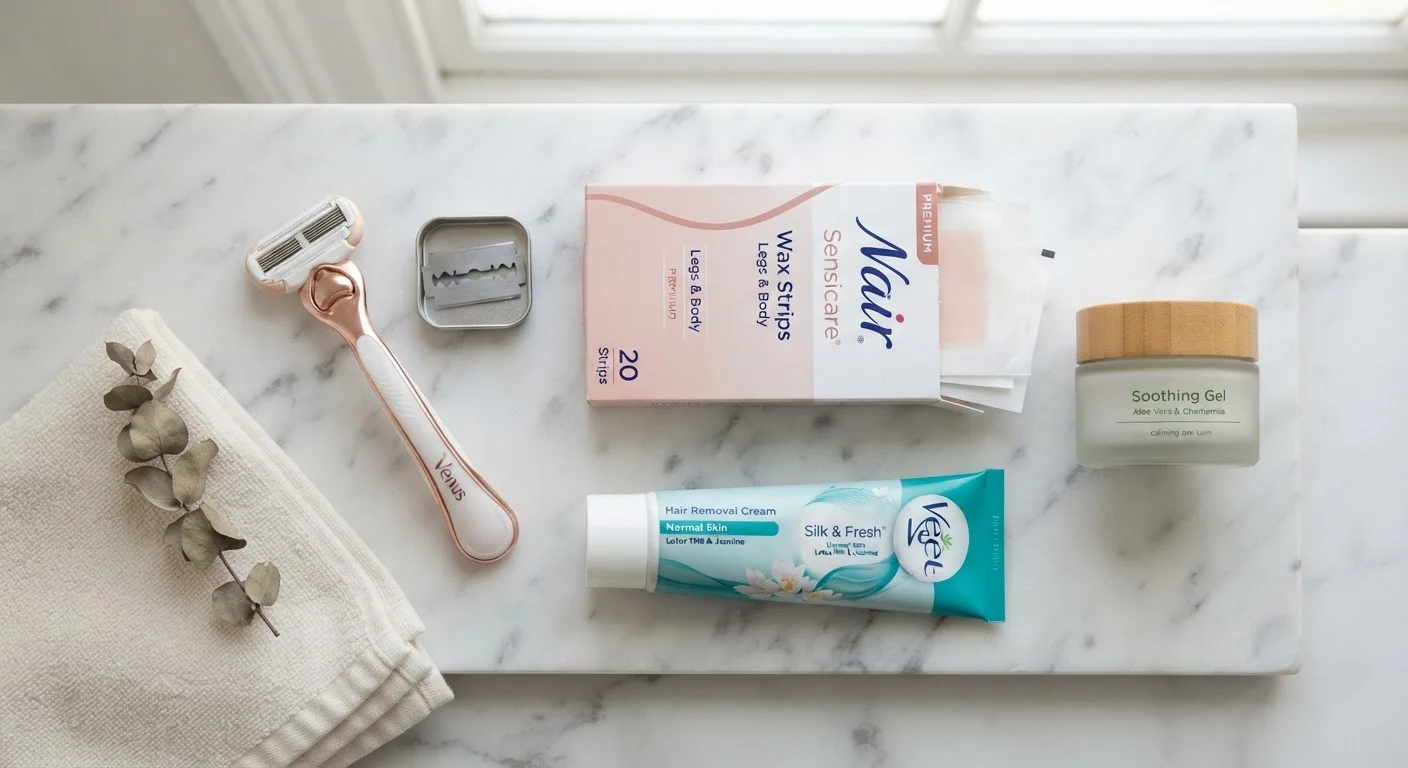
Key Takeaways
- Shaving removes hair at the skin's surface and typically requires the most frequent upkeep.
- Waxing pulls hair from the root, offering longer-lasting smoothness but greater discomfort.
- Depilatory creams dissolve hair chemically and suit those avoiding blades, but can irritate sensitive skin.
- Skin type, pain tolerance, and target area all influence which method works best for an individual.
- Patch-testing and proper aftercare reduce irritation risk regardless of method chosen.
Our Verdict
No single hair removal method outperforms the others across every measure. Shaving offers convenience and low cost; waxing delivers longer-lasting results for those comfortable with discomfort; depilatory creams provide a blade-free middle ground. The right choice depends on skin sensitivity, the body area involved, and how much time and upkeep a person is willing to commit to.
| Best for | Recommended |
|---|---|
| Those prioritising speed and everyday convenience | Shaving |
| Those wanting longer-lasting smoothness and able to tolerate some discomfort | Waxing |
| Those who prefer blade-free removal on less sensitive areas | Hair Removal Creams |
| Those with reactive or sensitised skin requiring extra caution | Consult a dermatologist before choosing any method |
How Each Method Works
Understanding the mechanism behind each approach helps explain why results — and side effects — differ so significantly.
Shaving uses a blade to cut hair at the skin's surface. It is painless when done correctly and works on virtually any body area, but because the hair shaft remains intact below the surface, regrowth appears quickly — often within one to three days — and can feel stubbly as the blunt-cut tip grows back through the skin.
Waxing adheres to the hair and removes it from the follicle. This delays regrowth considerably — typically three to six weeks — and repeated sessions can cause the follicle to weaken over time, potentially leading to finer regrowth. The trade-off is discomfort during application and a higher risk of post-procedure redness or folliculitis (inflammation around the hair follicle).
Depilatory creams (also called hair removal creams) use alkaline chemicals — commonly calcium thioglycolate — to break down the keratin protein structure of the hair shaft just below the skin's surface. The dissolved hair can then be wiped away. Results last slightly longer than shaving but not as long as waxing, and the chemical action requires careful attention to timing and skin compatibility.
| Shaving | Waxing | Hair Removal Creams | |
|---|---|---|---|
| How it removes hair | Cuts at skin surface | Pulls from follicle root | Dissolves hair shaft chemically |
| Typical results duration | 1–3 days | 3–6 weeks | 1–2 weeks |
| Pain level | Minimal (if technique is correct) | Moderate to high | Low (chemical sting possible) |
| Skin irritation risk | Razor burn, ingrown hairs | Redness, folliculitis, skin lifting | Chemical burns if overused |
| Ease of at-home use | High | Moderate | High |
| Patch test recommended | No (standard use) | Yes (especially sensitive areas) | Yes (always) |
Skin Sensitivity and Safety Considerations
Each method carries a distinct risk profile, and skin type is one of the most important variables to consider.
Shaving risks include nicks, razor burn, and ingrown hairs — particularly in areas with curved skin or coarser hair texture. Using a sharp, clean blade, shaving in the direction of hair growth, and following up with a fragrance-free moisturiser significantly reduces these risks. Those with sensitised or reactive skin should pay close attention to post-shave products, as alcohol-heavy aftershaves can worsen irritation.
Waxing risks include burns from overly hot wax, skin lifting (particularly if retinoids or exfoliating acids are in use), and contact dermatitis. Anyone using prescription topical medications or active skincare ingredients — such as those discussed in our guide to chemical exfoliants — should pause those products for at least 48–72 hours before waxing.
Depilatory cream risks centre on chemical sensitivity. The alkaline agents that dissolve hair can also disrupt the skin barrier, causing redness, itching, or chemical burns if left on too long or used on the face without a formulation specifically designed for that area. A patch test — applying a small amount to the inner arm and waiting 24 hours — is strongly recommended before full use.
Active Skincare Ingredients and Hair Removal
Using retinoids, AHAs, or BHAs near the time of waxing or depilatory cream application significantly increases the risk of skin lifting or chemical burns. Pause active exfoliating ingredients for at least 48–72 hours before any hair removal treatment in the same area, and wait until skin has fully recovered before reintroducing them.
Practical Factors: Time, Cost, and Technique
Beyond skin response, day-to-day practicalities shape which method fits a person's routine.
Frequency is the most obvious variable. Shaving may be needed every few days; waxing typically every three to six weeks; depilatory creams roughly every one to two weeks, depending on individual hair growth rate and the area treated.
At-home versus professional settings also matters. Shaving and depilatory creams are almost always self-administered. Waxing can be done at home with pre-made strips or heated wax kits, but professional salon waxing reduces the risk of burns and uneven application — particularly for harder-to-reach areas. If fragrance sensitivity is a concern with salon products, our overview of fragrance in skincare provides useful context for evaluating product ingredients.
Body area influences method suitability as well. Facial skin is generally more reactive than legs or underarms, and not all products are formulated for every zone. Always check product labelling for intended areas of use.
Time Your Hair Removal Wisely
For waxing, avoid scheduling sessions immediately before sun exposure or strenuous exercise, as open follicles are more susceptible to irritation and bacterial entry. With any method, applying a gentle, fragrance-free moisturiser within minutes of hair removal helps restore the skin barrier and reduce post-procedure redness.
Making the Right Choice for Your Skin
Because hair removal interacts directly with the skin barrier, matching method to individual skin characteristics matters more than following a universal rule.
- Coarse or fast-growing hair: Waxing tends to produce longer-lasting results and may reduce density over time with consistent use.
- Fine or sparse hair: Any method works well; shaving or depilatory creams may be sufficient without the discomfort of waxing.
- Darker or deeper skin tones: Post-inflammatory hyperpigmentation (darkening of the skin after irritation) is a documented risk with all three methods. Minimising friction and inflammation — through proper technique and gentle aftercare — is particularly important.
- Reactive or barrier-compromised skin: Shaving with a single-blade razor and a sensitive-formulated gel is typically the gentlest option; depilatory creams and waxing both carry higher irritation risk.
This article is for general informational purposes only and does not constitute medical or dermatological advice. Individuals with skin conditions, allergies, or concerns about any hair removal method should consult a qualified dermatologist before proceeding.