

Key Takeaways
- Deep breathing activates the parasympathetic nervous system quickly, making it ideal for in-the-moment stress relief.
- Progressive muscle relaxation (PMR) works by deliberately tensing and releasing muscle groups to reduce physical tension over time.
- Both techniques have research support for reducing anxiety symptoms, but they work through different physiological pathways.
- Deep breathing requires no physical space or setup; PMR typically takes 15–20 minutes and a quiet place to lie or sit comfortably.
- The two practices can be used together — many structured relaxation programs combine both methods.
- Neither technique replaces professional mental health support when stress becomes chronic or overwhelming.
Option A
Deep Breathing
The fast-access, breath-centered reset.
Best for: Anyone needing a quick, discreet way to calm the nervous system in the moment — at a desk, before a presentation, or during a tense conversation.
Option B
Progressive Muscle Relaxation
The systematic, body-wide tension release.
Best for: People who carry stress as physical tension — tight shoulders, jaw clenching, or difficulty unwinding at the end of the day — and who benefit from a structured, full-body practice.
If you need immediate stress relief during a busy day
Deep Breathing
A few slow, controlled breaths can shift your nervous system response within minutes, requiring no equipment or privacy.
If you carry tension in your body and struggle to unwind before sleep
Progressive Muscle Relaxation
PMR systematically addresses physical tension from head to toe, making it especially useful as an evening wind-down practice.
If you are new to relaxation techniques and want the gentlest starting point
Deep Breathing
Deep breathing has virtually no learning curve and can be practiced anywhere, making early success more achievable.
If you experience stress-related muscle pain, headaches, or jaw tightness
Progressive Muscle Relaxation
PMR directly targets neuromuscular tension and has clinical support for reducing somatic symptoms associated with chronic stress.
If you want to build a combined relaxation habit for overall resilience
Deep Breathing
Starting with deep breathing is a sustainable foundation; PMR can be layered in as a longer session when time and setting allow.
How Each Technique Works
Despite sharing the goal of stress reduction, deep breathing and progressive muscle relaxation (PMR) operate through distinct mechanisms. Understanding that difference helps you choose — or combine — them more intentionally.
Deep breathing works primarily through the autonomic nervous system. Slow, diaphragmatic breaths stimulate the vagus nerve, shifting the body from a sympathetic (fight-or-flight) state toward parasympathetic (rest-and-digest) dominance. Common patterns include box breathing — inhale, hold, exhale, and hold for equal counts — and the 4-7-8 method, where the exhale is extended to promote relaxation. The physiological effect is measurable: heart rate slows, cortisol levels may decrease, and blood pressure can drop within minutes of sustained practice.
Progressive muscle relaxation, developed by physician Edmund Jacobson in the early 20th century, takes a different route. The practice involves deliberately contracting individual muscle groups — feet, calves, thighs, abdomen, shoulders, face — holding each contraction for several seconds, then fully releasing it. The contrast between tension and release trains the nervous system to recognize and let go of chronic muscular holding patterns. Over time, practitioners often develop a heightened awareness of where they unconsciously store stress in their bodies.
| Criterion | Deep Breathing | Progressive Muscle Relaxation |
|---|---|---|
| Primary mechanism | Vagal nerve activation via breath control | Tension-release cycle across muscle groups |
| Typical session length | 2–10 minutes | 15–20 minutes |
| Space required | Any setting, any position | Quiet, private space to sit or lie down |
| Learning curve | Minimal — usable immediately | Moderate — improves with regular practice |
| Best timing | In-the-moment acute stress | Scheduled daily practice or pre-sleep routine |
| Research support | Strong for anxiety, blood pressure, emotional regulation | Strong for anxiety, sleep quality, somatic tension |
| Physical contraindications | Few; caution with hyperventilation tendency | Avoid or modify with muscle injuries or chronic pain |
Both approaches have meaningful research backing. Studies published in peer-reviewed journals have associated regular PMR with reduced anxiety and improved sleep quality, while diaphragmatic breathing has been linked to lower perceived stress scores and improved emotional regulation. Neither is a cure — they are tools within a broader well-being toolkit. For related context on practices that share overlapping goals, see our piece on mindfulness versus meditation.
Practical Differences: Time, Setting, and Accessibility
Choosing between these techniques often comes down to logistics as much as preference.
Deep breathing can be practiced in under two minutes, silently, in almost any position. It requires no preparation, no floor space, and no guidance. This makes it especially effective during acute stress — a difficult work call, a crowded waiting room, or a moment of overwhelm. The barrier to entry is essentially zero.
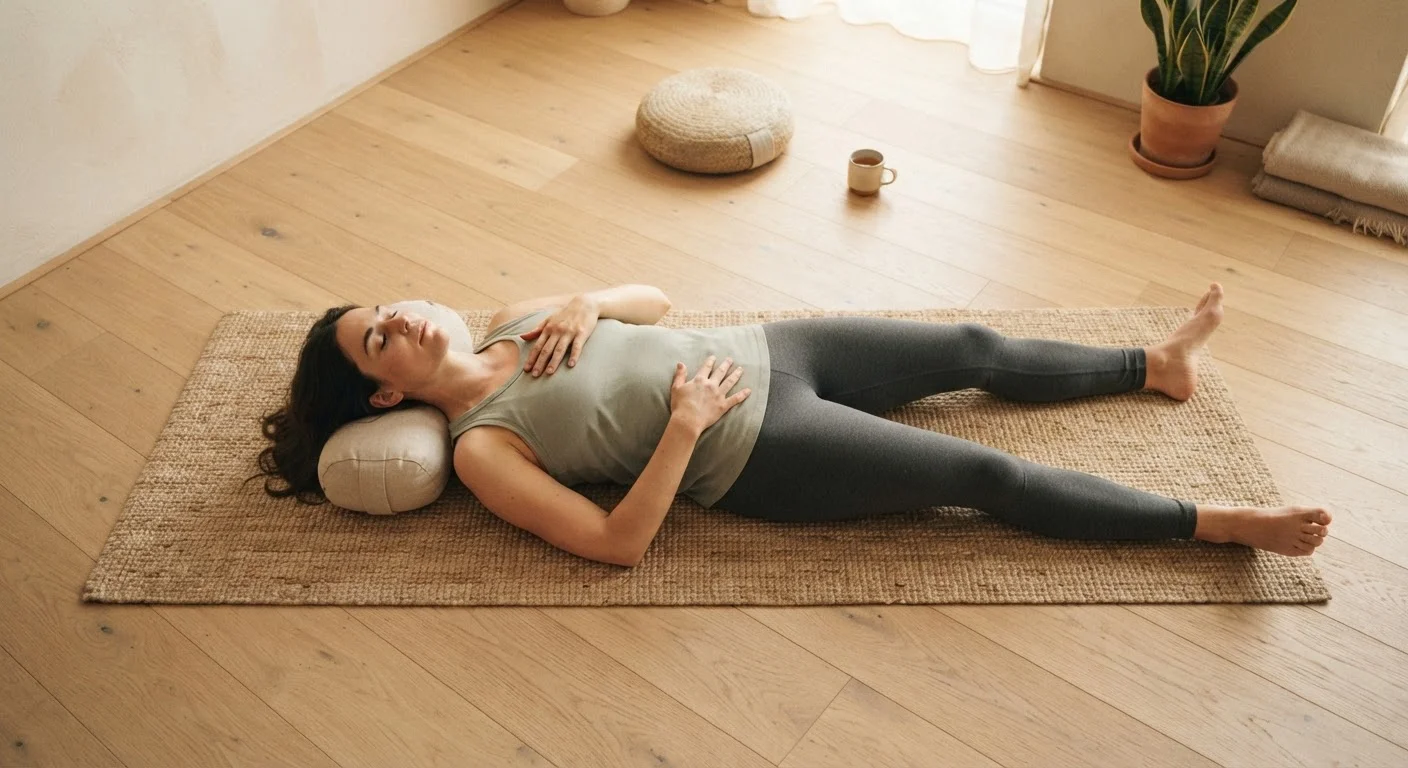
PMR, by contrast, typically requires 15 to 20 minutes and a relatively quiet, private space where you can sit or lie comfortably without interruption. Most guided sessions move systematically through 10 to 16 muscle groups. While audio guides and apps can support beginners, consistency matters: research suggests the tension-awareness benefit builds with regular, repeated sessions over several weeks.
~77%
Adults reporting physical symptoms of stress
The American Psychological Association's Stress in America surveys have consistently found that a large majority of US adults experience physical symptoms they attribute to stress.
6–8 weeks
Typical timeframe for PMR benefits to consolidate
Clinical research on PMR generally uses intervention periods of six to eight weeks before measuring outcomes such as reduced anxiety and improved sleep.
~5 min
Time for noticeable parasympathetic shift via deep breathing
Physiological studies have shown measurable heart rate variability changes from sustained slow diaphragmatic breathing within approximately five minutes.
It is worth noting that some people find the deliberate tensing phase of PMR counterintuitive or physically uncomfortable, particularly those with injuries or chronic pain. Anyone with musculoskeletal conditions should consult a healthcare provider before beginning PMR. Deep breathing carries fewer physical contraindications, though individuals prone to hyperventilation may need to approach rapid breathing patterns cautiously.
It is also worth recognizing that some stress-management strategies that feel immediately helpful can subtly backfire over time. Our editorial team has explored this tension in depth — see why well-meaning stress relief approaches sometimes backfire for a closer look at patterns to watch for.
This article is for general informational purposes only and does not constitute medical or psychological advice. If stress is significantly affecting your daily functioning or well-being, please consult a qualified healthcare or mental health professional.