

Key Takeaways
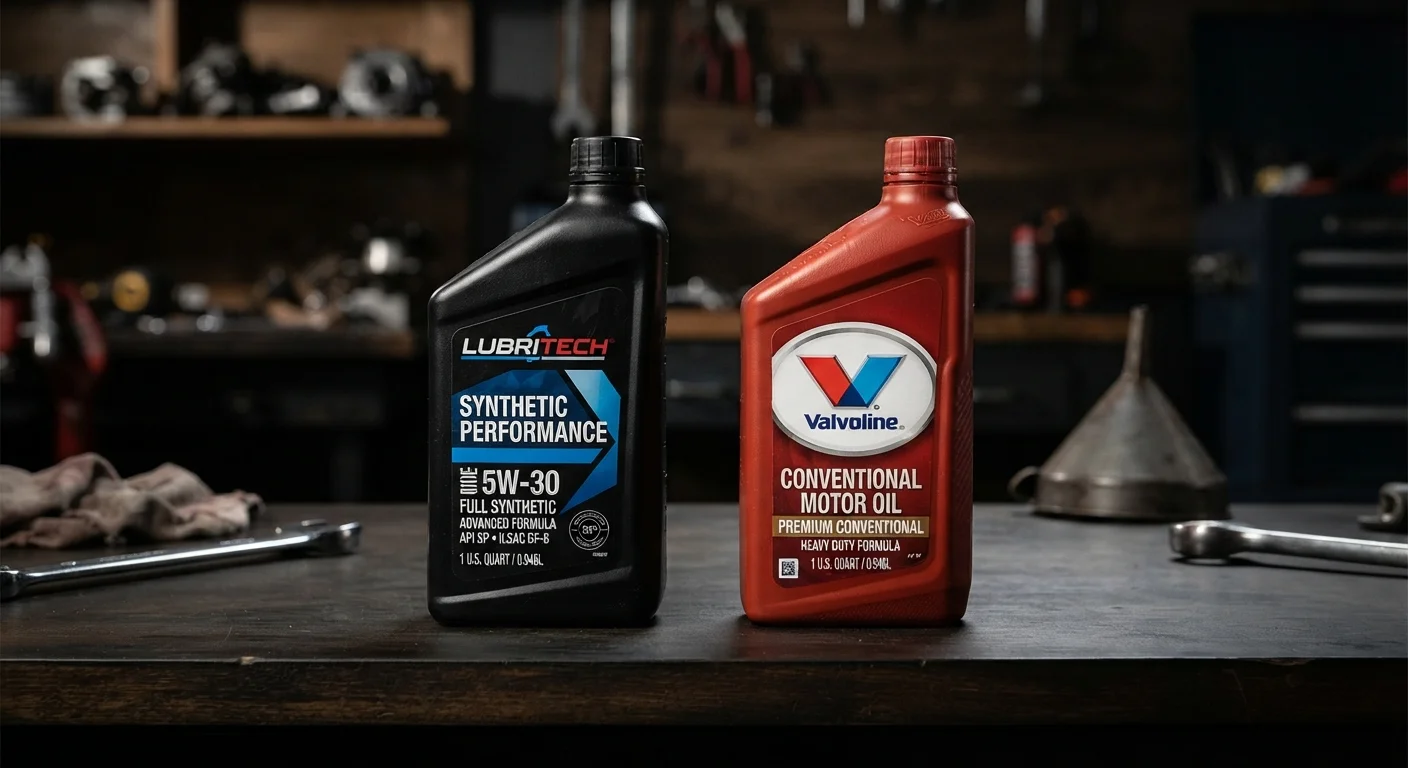
- Synthetic oil is chemically engineered for uniform molecules, while conventional oil is refined directly from crude petroleum.
- Synthetic oil generally outperforms conventional in extreme temperatures and high-stress driving conditions.
- Conventional oil typically requires more frequent changes — often every 3,000–5,000 miles versus 7,500–15,000 for synthetics.
- Using the type specified in your owner's manual is more important than choosing based on price alone.
- Synthetic oil costs more upfront but may reduce long-term maintenance costs through extended intervals.
Option A
Synthetic Motor Oil
The engineered, high-performance formulation.
Best for: Drivers seeking longer drain intervals, extreme temperature protection, and maximum engine efficiency.
Option B
Conventional Motor Oil
The time-tested, widely available standard.
Best for: Owners of older or simpler engines with moderate driving demands and shorter change intervals.
If you drive in extreme heat, cold, or stop-and-go traffic regularly
Synthetic Motor Oil
Synthetic oil maintains stable viscosity across a wider temperature range, reducing engine wear under demanding conditions.
If you own an older vehicle designed before synthetic oils were common
Conventional Motor Oil
Some older engines with worn seals may be better suited to conventional oil; always check the manufacturer's guidance.
If you drive long highway miles or want to extend oil change intervals
Synthetic Motor Oil
Synthetic formulations resist breakdown longer, making them well-suited to high-mileage highway drivers who want fewer service visits.
If your vehicle is used lightly and your manufacturer permits conventional oil
Conventional Motor Oil
For low-demand driving where the manufacturer approves conventional oil, it remains a reliable and cost-effective option.
How Each Oil Is Made
The most fundamental difference between synthetic and conventional motor oil lies in their origin and manufacturing process. Conventional oil — sometimes called mineral oil — is derived directly from crude petroleum extracted from the earth. It is refined to remove impurities, but the resulting molecules remain varied in size and structure, which affects how consistently it performs under stress.
Synthetic oil, by contrast, is built in a laboratory. Chemists start with base compounds — often derived from natural gas or refined petroleum — and engineer uniform, precisely sized molecules. This molecular consistency is what gives synthetic oil its performance edge. Because there are fewer irregularities, the oil flows more predictably, resists thermal breakdown more effectively, and leaves fewer deposits inside an engine.
There is also a middle-ground option: synthetic blends, which combine conventional base oil with a portion of synthetic. These offer some benefits of full synthetic at a lower price point, though they don't match full synthetic's performance ceiling. For a deeper look at how oil grades factor in, see our guide to engine oil grades and intervals.
Performance Under Pressure
Where the two oil types diverge most noticeably is under thermal and mechanical stress. In cold weather, conventional oil thickens more than synthetic, which can slow its flow to critical engine components during startup — a period known as cold-start, when much of the day's engine wear actually occurs. Synthetic oil flows more readily at low temperatures, reaching bearings and cylinder walls faster.
At the other extreme, high operating temperatures cause conventional oil to thin and oxidize more quickly, reducing its protective film on metal surfaces. Synthetic oil resists this degradation more effectively, maintaining a stable viscosity layer even in turbocharged engines or during repeated high-load driving.
| Criterion | Synthetic Motor Oil | Conventional Motor Oil |
|---|---|---|
| Manufacturing origin | Chemically engineered molecules | Refined from crude petroleum |
| Cold-weather flow | Flows readily at low temperatures | Thickens more in cold conditions |
| High-temperature stability | Resists thinning and oxidation well | Degrades faster under heat stress |
| Typical change interval | 7,500–15,000 miles (varies by vehicle) | 3,000–5,000 miles (varies by vehicle) |
| Cost per quart | Higher upfront cost | Lower upfront cost |
| Engine deposit formation | Fewer deposits over time | More deposits with extended use |
| Best suited for | Modern, high-performance, turbocharged engines | Older engines with moderate demands |
These differences matter most for drivers who face harsh winters, live in hot climates, tow or haul frequently, or sit in prolonged stop-and-go traffic. For moderate, consistent driving conditions, the gap narrows considerably.
Change Intervals and Long-Term Cost
Conventional oil typically degrades faster and requires changing more frequently — commonly every 3,000 to 5,000 miles, depending on driving conditions and the vehicle. Synthetic oil is engineered to last longer, and many manufacturers specify intervals of 7,500 to 15,000 miles for vehicles using full synthetic. Always defer to the interval listed in your owner's manual rather than general guidelines.
7,500–15,000 mi
Typical synthetic oil change interval
Many vehicle manufacturers specify this range for engines running full synthetic; always verify in your owner's manual.
3,000–5,000 mi
Typical conventional oil change interval
This is the commonly cited range for conventional oil, though some modern conventional formulations and driving conditions may allow slightly longer intervals.
While synthetic oil carries a higher per-quart price, fewer annual oil changes can offset part of that cost over time. However, the math depends heavily on how many miles you drive, your vehicle's specific requirements, and local service pricing. Neither option is universally cheaper — the right comparison accounts for your actual usage pattern.
For more context on how intervals interact with viscosity grades, the guide to oil viscosity and change intervals covers the topic in depth.
Which Oil Does Your Vehicle Actually Need?
The single most reliable source for this decision is your vehicle's owner's manual. Automakers specify the oil type and viscosity grade required for proper engine operation. Many modern engines — particularly turbocharged, direct-injection, or high-compression designs — are engineered specifically for full synthetic oil and may suffer accelerated wear if run on conventional. Older, simpler engines may have no such requirement.
It's a common concern that switching from conventional to synthetic in a high-mileage engine might cause leaks. In most cases, a properly formulated full synthetic is safe for high-mileage engines, though some drivers choose high-mileage-specific blends that include seal conditioners. If you're unsure, a qualified mechanic can assess your engine's condition before you switch.
Don't Mix Oil Types Without Guidance
While synthetic and conventional oils are generally compatible when mixed temporarily, topping off regularly with a different type than what's specified can dilute the oil's engineered properties. If you need to add oil in a pinch, use what's available and plan a full oil change soon. For routine maintenance, stick to the type your manufacturer recommends.
Ultimately, the synthetic vs. conventional debate is less about which is objectively superior and more about matching the oil to your engine's design, your driving patterns, and the manufacturer's specifications. Both options protect engines effectively when used correctly.